

Why Is PU Leather Scratch and Moisture Resistant in Notebooks?
2026-09-28
When a customer returns a notebook after three months of use, the complaint is rarely about the paper. It is about the cover. The corners are frayed, the surface has a shiny patch where the hand rests, and there is a water stain from a spilled coffee. For a brand that positions its PU Leather Notebooks as premium, these failures undermine the entire product experience. PU leather is not a single material. It is a composite of a polymer coating, a backing fabric, and a release paper. The scratch and moisture resistance depend on the formulation of the coating and the quality of the backing. This guide explains how the material works and how to specify it for durability.
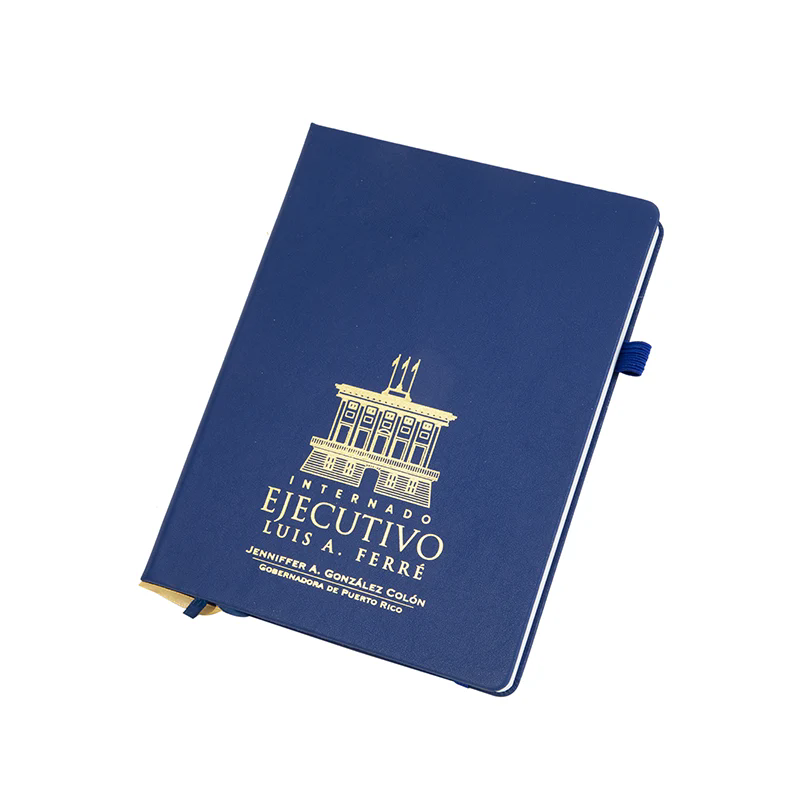
1. What Is the Structure of PU Leather Used in Notebook Covers?
PU leather, also called polyurethane leather, is a layered material. The top layer is a polyurethane coating that provides the color, the texture, and the resistance to scratches and moisture. Below the coating is a backing fabric, which is usually polyester knit or woven cotton. The backing provides the tensile strength and the tear resistance. Between the coating and the backing, there may be a thin layer of adhesive. The bottom surface is often a release paper that is peeled off before the material is laminated to the notebook board. The table below shows the layers and their functions.
| Layer | Typical thickness | Material | Function |
| Top coating | 50 – 100 µm | Polyurethane (PU) | Scratch resistance, moisture barrier, color |
| Adhesive | 10 – 20 µm | Polyurethane or acrylic | Bonds coating to backing |
| Backing fabric | 150 – 300 µm | Polyester knit or woven cotton | Tensile strength, tear resistance |
| Release paper | 80 – 120 µm | Silicone-coated paper | Protects adhesive until lamination |
The performance of the PU Leather Notebooks depends on the quality of each layer. A thin coating (below 50 µm) will wear through quickly. A low-quality backing will stretch and cause the coating to crack. In our factory, we use a coating thickness of 80 to 100 µm and a polyester knit backing with a weight of 180 to 220 grams per square meter. This combination provides a balance of durability and flexibility.
2. How Does the PU Coating Resist Scratches?
The scratch resistance of the PU coating is determined by its hardness and its elastic recovery. Hardness is measured on the Shore A or Shore D scale. A harder coating resists penetration by sharp objects. Elastic recovery is the ability of the coating to return to its original shape after being deformed. A coating with high elastic recovery will not show a permanent mark when it is scratched. The table below shows the scratch resistance of different PU coating formulations.
| Coating formulation | Shore A hardness | Elastic recovery | Scratch resistance (1-5 scale) |
| Standard PU | 70 – 80 | Moderate | 3 |
| High-hardness PU | 85 – 95 | Moderate | 4 |
| PU with silicone additive | 75 – 85 | High | 5 |
| PU with ceramic filler | 90 – 100 | Low | 4 (but can crack) |
The most effective formulation for scratch resistance is a PU with a silicone additive. The silicone reduces the surface friction, which allows the scratch to slide over the surface instead of cutting into it. The elastic recovery of the silicone-modified PU is also higher, so any minor deformation disappears. In our factory, we use a silicone-modified PU coating for our premium PU Leather Notebooks. The coating passes a 500-gram scratch test with a 0.5 mm tungsten carbide tip without visible damage.
3. How Does the Material Resist Moisture and Staining?
Moisture resistance is determined by the hydrophobicity of the coating and the integrity of the backing. A hydrophobic coating repels water and prevents it from penetrating. The contact angle of a water droplet on the surface is a measure of hydrophobicity. A contact angle above 90 degrees means the surface is hydrophobic. The table below shows the contact angle and moisture resistance of different coatings.
| Coating type | Water contact angle | Moisture resistance | Stain resistance |
| Standard PU | 70 – 80° | Moderate | Moderate |
| Hydrophobic PU | 90 – 100° | Good | Good |
| Fluorinated PU | 110 – 120° | Excellent | Excellent |
| PU with silicone additive | 100 – 110° | Very good | Very good |
The backing fabric also affects moisture resistance. If the backing is absorbent, water can wick through the edges of the cover and cause the board to swell. A polyester knit backing is hydrophobic and does not absorb water. A woven cotton backing is absorbent and should be avoided for applications where moisture resistance is important. In our factory, we use a polyester knit backing for all of our PU Leather Notebooks. We also seal the edges of the cover with a hot-melt adhesive that prevents water from entering the lamination.
4. How Should Buyers Evaluate the Durability of PU Leather Notebooks?
Buyers should evaluate three things before placing an order. First, request a material sample and perform a scratch test. Use a coin or a key to scratch the surface with moderate pressure. A high-quality PU coating will not show a permanent mark. Second, perform a water test. Place a few drops of water on the surface and let it sit for 5 minutes. Then wipe it dry. The surface should not show any darkening or swelling. Third, check the edge sealing. Look at the edge of the cover where the material is cut. If the backing fabric is exposed, moisture can enter. A well-made PU Leather Notebooks will have a sealed edge. In our factory, we provide a pre-production sample with every order. We also provide a test report that documents the scratch resistance, the water contact angle, and the abrasion resistance of the material.
Frequently Asked Questions About PU Leather Notebooks
Summary for Product Managers and Buyers
PU leather is a composite material that provides scratch and moisture resistance for notebook covers through a combination of a hard, elastic coating and a hydrophobic backing. The performance depends on the coating thickness, the coating formulation, and the backing material. Buyers should evaluate the material using simple scratch and water tests and should verify that the edges are sealed. Wenzhou Yanhe Technology Co., Ltd. has been manufacturing PU Leather Notebooks for over 12 years and provides full material testing and custom design services.
Wenzhou Yanhe Technology Co., Ltd. manufactures PU Leather Notebooks with silicone-modified PU coatings, polyester knit backings, and sealed edges. We provide material samples, test reports, and custom logo and color options.