

Why Does Lay-Flat Binding Matter in PU Leather Notebooks?
2026-10-10
A procurement manager evaluates three samples of PU Leather Notebooks for a corporate gift program. The covers look identical. The paper quality is the same. The price is within 5 percent. But when she opens each notebook on her desk, the difference is obvious. Sample A lies completely flat at every page. Sample B stays open but the pages curve upward at the spine. Sample C snaps shut as soon as she removes her hand. She knows that the executives who receive these gifts will notice the same thing. The lay-flat behavior is determined by the binding method, not the cover material. This guide explains why lay-flat binding matters and how to specify it correctly.
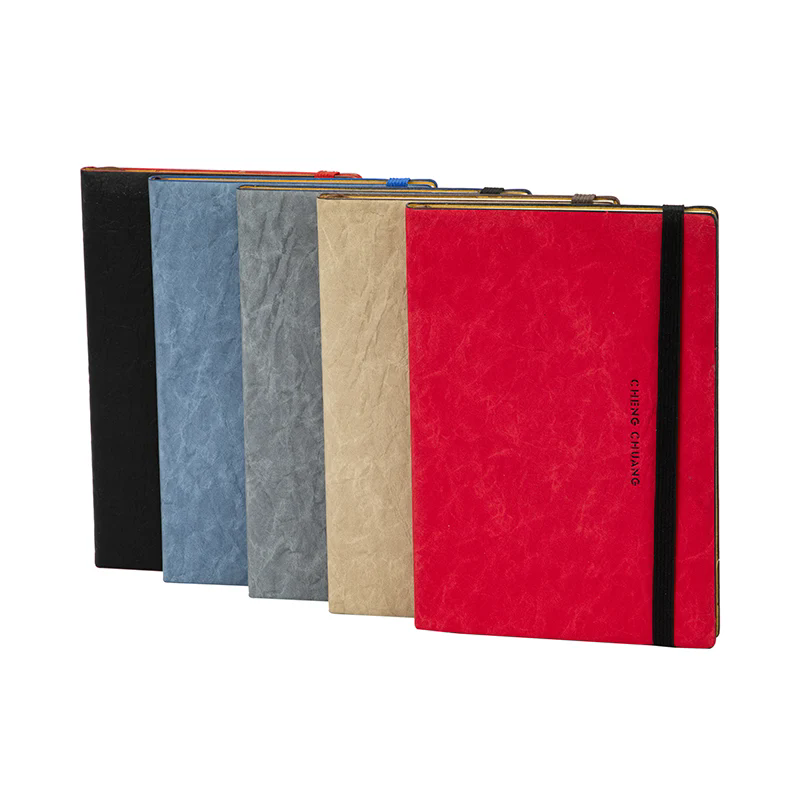
1. What Does Lay-Flat Binding Actually Mean for Daily Use?
Lay-flat binding means the notebook stays open at the page you are writing on without any external force. The pages do not curl back toward the spine, and the notebook does not close on its own. For a right-handed writer, this means the page you are writing on is fully supported by the desk or table. For a left-handed writer, it means the page does not lift up when the hand moves across it. The table below shows the relationship between binding type and lay-flat performance.
| Binding type | Lay-flat angle | Writing comfort | Durability after 500 open/close cycles |
| Perfect binding (glued spine) | 20 – 40 degrees | Poor (requires hand pressure) | Spine cracks, pages loosen |
| Sewn binding (case bound) | 60 – 80 degrees | Moderate (pages curve upward) | Good, but spine creases |
| Lay-flat sewn binding (our method) | 180 degrees (fully flat) | Excellent | Spine intact, pages secure |
| Wire-o binding | 180 degrees (fully flat) | Excellent | Wire deforms, pages tear at holes |
| Disc binding | 180 degrees (fully flat) | Excellent | Discs loosen, pages fall out |
The difference between a perfect-bound notebook and a lay-flat sewn notebook is the difference between a notebook that is used once and a notebook that is used every day. In our factory, we produce PU Leather Notebooks with lay-flat sewn binding as the standard for corporate gift programs. Yanhe Technology has been manufacturing these notebooks for over 12 years.
2. How Is Lay-Flat Binding Constructed in a PU Leather Notebook?
Lay-flat binding is not a single feature. It is the result of three construction details working together. First, the text block is sewn rather than glued. The sewing creates a flexible hinge at the spine. Second, the spine of the cover is not glued to the text block. The cover is attached only at the front and back endpapers. This allows the text block to move independently. Third, the spine of the cover is reinforced with a flexible liner that allows it to bend without cracking. The table below shows the construction details and their function.
| Construction detail | Material | Function | Common failure if omitted |
| Sewn text block | Thread (polyester or cotton) | Creates flexible hinge | Pages loosen and fall out |
| Unglued spine | None (gap between spine and block) | Allows independent movement | Notebook does not open flat |
| Flexible spine liner | Paper or cloth | Reinforces spine against cracking | Spine cracks after repeated opening |
| PU leather cover | Polyurethane coated fabric | Provides durability and appearance | Cover wears through |
In our factory, we use a sewing machine with a lock stitch for the text block. The spine of the cover is left unglued and reinforced with a 0.5 mm paper liner. The PU leather cover is attached to the text block only at the endpapers. This construction allows the notebook to open fully flat at every page. Wenzhou Yanhe Technology Co., Ltd. tests every batch of PU Leather Notebooks by opening them 500 times and checking for spine cracking and page loosening.
3. How Does PU Leather Cover Material Affect Lay-Flat Performance?
The PU leather cover material affects lay-flat performance because it determines the stiffness of the cover. A stiffer cover resists bending at the spine and can prevent the notebook from opening fully. A softer cover allows the spine to flex more easily. The table below shows the relationship between cover stiffness and lay-flat angle.
| Cover material | Thickness (mm) | Stiffness (relative) | Lay-flat angle | Recommended application |
| PU leather on 1.5 mm board | 1.8 | High | 120 – 140 degrees | Executive gifts |
| PU leather on 1.0 mm board | 1.3 | Moderate | 150 – 170 degrees | General corporate gifts |
| PU leather on 0.6 mm board | 0.9 | Low | 180 degrees | Lay-flat notebooks |
| PU leather only (no board) | 0.6 | Very low | 180 degrees | Flexible notebooks |
Buyer's tip: If lay-flat performance is a priority, specify a PU leather cover on a 0.6 mm board or a cover with no board. A 1.5 mm board provides a more rigid feel but reduces the lay-flat angle. In our factory, we recommend the 0.6 mm board for notebooks that will be used for writing, and the 1.5 mm board for notebooks that will be used primarily for presentation.
4. How Should Lay-Flat Binding Be Evaluated Before Placing an Order?
Before placing a bulk order for PU Leather Notebooks, buyers should evaluate three things. First, open the notebook to the middle page and place it on a flat surface. The pages should lie flat without any hand pressure. Second, open and close the notebook 50 times. The spine should not crack, and the pages should not loosen. Third, check the alignment of the pages at the spine. If the pages are not aligned, the notebook will not open flat. The table below shows the evaluation criteria and the acceptable limits.
| Evaluation criterion | Acceptable limit | Test method |
| Lay-flat angle at middle page | 180 degrees ± 5 degrees | Place on flat surface and measure |
| Spine cracking after 50 cycles | No visible cracks | Visual inspection |
| Page loosening after 50 cycles | No pages detached | Gentle pull test on 10 random pages |
| Page alignment at spine | Within 1 mm | Visual inspection |
| Cover attachment | Endpapers secure | Gentle pull test on cover |
In our factory, we provide a pre-production sample for evaluation before mass production. We also perform a 500-cycle test on the binding as part of our quality control process. Wenzhou Yanhe Technology Co., Ltd. provides a binding test report with every order.
Frequently Asked Questions About Lay-Flat Binding in PU Leather Notebooks
Summary for Corporate Gift Buyers
Lay-flat binding is a critical feature for PU Leather Notebooks that are intended for writing. It allows the notebook to stay open at the page you are using, which improves the writing experience and the perceived quality of the gift. The lay-flat performance is determined by the sewing method, the unglued spine, and the cover stiffness. When evaluating samples, test the lay-flat angle, the spine durability, and the page alignment. The additional cost of lay-flat binding is 15 to 25 percent, but it is usually justified by the higher user satisfaction. Wenzhou Yanhe Technology Co., Ltd. has been manufacturing PU Leather Notebooks for over 12 years and provides full binding test reports for our customers.
Wenzhou Yanhe Technology Co., Ltd. manufactures PU Leather Notebooks with lay-flat sewn binding, unglued spines, and flexible spine liners. We provide pre-production samples and 500-cycle binding test reports for all of our products.