

Why Does High Temperature PET Tape Matter So Much in Modern Manufacturing?
2026-03-02
Over the past few years, I have seen how manufacturers struggle with masking, insulation, and protection tasks under extreme heat. As production standards continue to rise, Guangdong Suiying New Materials Technology Co., Ltd. has gradually introduced and refined its High Temperature PET Tape solutions to meet the growing demand for stable, heat-resistant, and residue-free performance. Instead of relying on generic tapes that fail under pressure, I now recommend High Temperature PET Tape as a reliable solution for industries that cannot afford downtime or surface damage.
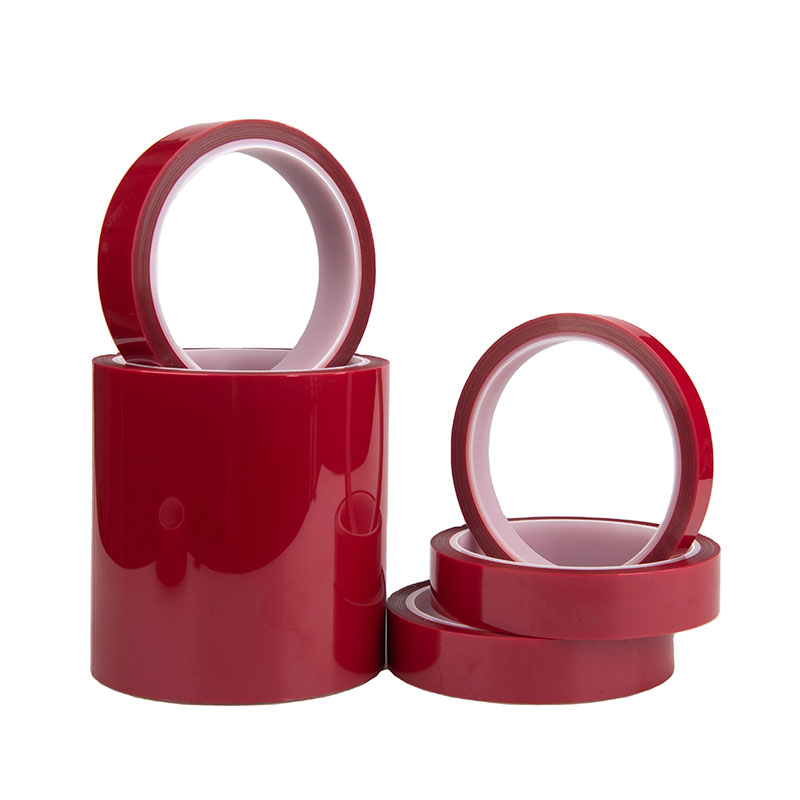
Are You Losing Productivity Because Your Tape Fails Under Heat?
Many manufacturers contact me after facing the same issue: ordinary adhesive tapes shrink, lift, or leave glue residue during high-temperature processes. Whether in powder coating, PCB solder masking, lithium battery assembly, or automotive painting, these failures lead to rework, wasted materials, and production delays.
From my experience, the most common pain points include:
- Adhesive breakdown during curing or baking cycles
- Film deformation at elevated temperatures
- Glue residue contaminating sensitive surfaces
- Poor insulation performance in electronic applications
- Inconsistent thickness affecting precision masking
This is exactly where High Temperature PET Tape proves its value. It is engineered to maintain dimensional stability and adhesive integrity under continuous high heat, helping manufacturers maintain efficiency and product quality.
What Makes High Temperature PET Tape Structurally Reliable?
When I evaluate industrial tapes, I focus on structure first. A dependable High Temperature PET Tape typically consists of a polyester film backing coated with a specially formulated silicone adhesive. This combination delivers thermal resistance, electrical insulation, and clean removal performance.
| Component | Function | Performance Advantage |
| Polyester Film Backing | Heat-resistant carrier material | Maintains shape and tensile strength under high temperature |
| Silicone Adhesive | High-temperature bonding layer | Stable adhesion without residue after removal |
| Uniform Coating | Consistent thickness control | Precision masking and insulation reliability |
This structural design allows High Temperature PET Tape to perform steadily in environments where standard acrylic-based tapes would soften or degrade.
How Does High Temperature PET Tape Improve PCB and Electronics Manufacturing?
In electronics production, even a small adhesive failure can compromise circuit reliability. I often see High Temperature PET Tape used in wave soldering, reflow soldering, and transformer insulation because it offers:
- Excellent dielectric strength
- Stable performance up to high processing temperatures
- Clean removal without lifting solder mask
- Minimal shrinkage during thermal cycling
When manufacturers switch to High Temperature PET Tape, they reduce the risk of contamination and improve consistency across batches. That stability directly supports higher yield rates and fewer inspection failures.
Can High Temperature PET Tape Withstand Powder Coating and Automotive Painting?
Powder coating lines typically operate at curing temperatures that challenge most adhesives. I have observed that High Temperature PET Tape maintains edge definition during coating and peels away cleanly after baking, protecting threads, holes, and precision surfaces.
For automotive painting and metal finishing, its resistance to heat and chemicals helps prevent paint bleed and adhesive residue. That means less post-process cleaning and faster turnaround time.
| Application Area | Typical Challenge | How High Temperature PET Tape Solves It |
| Powder Coating | Adhesive melting or edge lifting | Heat-stable silicone adhesive maintains bond |
| Automotive Painting | Paint bleed and residue | Sharp masking lines and clean removal |
| Battery Manufacturing | Thermal insulation and safety | Reliable dielectric and heat resistance |
Why Is Residue-Free Removal So Critical in Industrial Production?
One of the most underestimated factors in production cost is cleaning time. When tape leaves residue, operators must spend additional labor hours removing adhesive traces, and sensitive components may even be damaged.
I always emphasize that a well-designed High Temperature PET Tape should deliver clean peel performance after exposure to heat. This reduces rework, protects substrates such as aluminum, stainless steel, and coated panels, and ultimately lowers overall production costs.
How Do I Choose the Right High Temperature PET Tape for My Process?
Selection depends on several key parameters:
- Maximum operating temperature and duration
- Required thickness and tensile strength
- Surface type and adhesion requirements
- Electrical insulation needs
- Application environment including humidity and chemicals
By working closely with material engineers, I have found that customizing High Temperature PET Tape specifications—such as thickness, width, and adhesive formulation—ensures optimal compatibility with specific production lines.
Are You Ready to Upgrade Your Heat-Resistant Masking Solution?
If your current tape cannot withstand high curing temperatures, causes surface damage, or increases labor costs, it may be time to consider a better alternative. A well-engineered High Temperature PET Tape can enhance efficiency, protect sensitive components, and maintain product consistency across demanding industrial processes.
I encourage you to evaluate your current production challenges and explore how High Temperature PET Tape can support your operations. If you would like tailored recommendations or technical guidance, please contact us today to discuss your application requirements. Our team is ready to help you find a solution that fits your process and performance goals.