

Which Thermal Paper Types Are Recommended for Printers?
2026-10-09
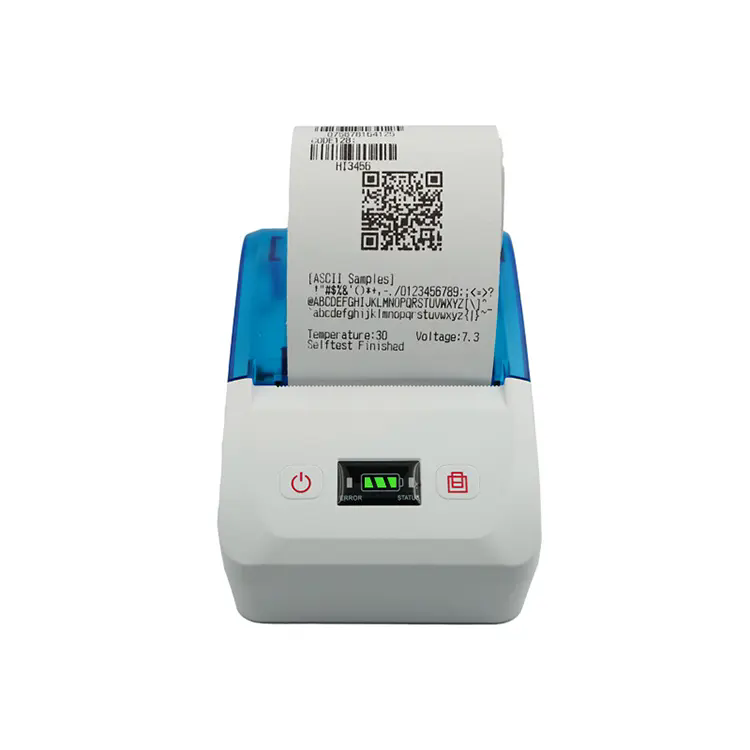
An IT operations manager supports 120 retail stores. Each store uses the same Thermal Receipt Printer model. But the complaints are inconsistent. Store A reports faded receipts after three months. Store B reports frequent paper jams. Store C reports that the printhead needs replacement every six months. The printers are identical. The difference is the paper. Not all thermal paper is the same. The coating formulation, the base paper, and the storage conditions determine how the paper performs in the printer and how long the printed image lasts. This guide explains the paper types and how to match them to the printer and the application.
1. What Are the Main Types of Thermal Paper and How Do They Differ?
Thermal paper is coated with a layer that contains a dye and a developer. When the Thermal Receipt Printer's printhead applies heat, the dye and developer react to form a dark image. The type of coating determines the sensitivity, the image stability, and the abrasion resistance. The three main types are standard thermal paper, top-coated thermal paper, and environmental thermal paper. The table below compares their properties.
| Paper type | Coating structure | Image density | Image stability | Printhead wear |
| Standard thermal | Single layer (dye + developer) | Good | 6 – 12 months | Moderate |
| Top-coated thermal | Base coat + top coat (protective layer) | Excellent | 2 – 5 years | Low |
| Environmental thermal | Undercoat + top coat (no BPA) | Very good | 1 – 3 years | Low |
In our factory, we produce Thermal Receipt Printer units that are compatible with all three paper types. However, the print quality and printhead life depend on the paper. A top-coated paper produces a sharper image and generates less dust, which extends the printhead life. A standard paper is less expensive but may require more frequent printhead cleaning. Xiamen Peite Electronic Technology Co., Ltd. has been manufacturing Thermal Receipt Printer units for over 10 years and provides paper compatibility guidelines for each model.
2. How Does Paper Coating Affect Printhead Life?
The printhead is the most expensive consumable part of a Thermal Receipt Printer. It consists of a ceramic substrate with a matrix of tiny resistors. Each resistor heats up when current passes through it. The heat activates the paper coating. If the paper coating is abrasive or generates dust, the printhead wears faster. The table below shows the printhead life for different paper types based on our factory's accelerated wear tests.
| Paper type | Printhead life (million lines) | Dust generation | Abrasion resistance |
| Standard thermal | 50 – 70 | High | Low |
| Top-coated thermal | 100 – 130 | Low | High |
| Environmental thermal | 90 – 120 | Low | Medium to high |
The printhead life with top-coated paper is 80 to 100 percent longer than with standard paper. For a store that prints 2,000 receipts per day, the printhead life with standard paper is approximately 2 years. With top-coated paper, the life extends to 4 years. The cost difference for the paper is typically 15 to 25 percent, but the savings on printhead replacement and downtime are significant. In our factory, we recommend top-coated paper for high-volume retail environments. Xiamen Peite Electronic Technology Co., Ltd. provides a printhead wear test report for each paper type we recommend.
3. Which Paper Type Should Be Used for Different Receipt Applications?
The recommended paper type depends on the required image life and the environmental conditions. For receipts that are handed to the customer and discarded within a week, standard paper is sufficient. For receipts that are kept for warranty or accounting purposes, top-coated paper is required. For receipts that may be exposed to heat, light, or plasticizers, a top-coated paper with a protective layer is necessary. The table below shows the recommended paper type for different applications.
| Application | Required image life | Recommended paper type | Special considerations |
| Fast food receipt | 1 – 7 days | Standard thermal | Low cost, high volume |
| Retail store receipt | 1 – 6 months | Top-coated thermal | Frequent handling, abrasion |
| Warranty receipt | 2 – 5 years | Top-coated thermal (high stability) | Storage in dark, cool place |
| ATM receipt | 1 – 3 years | Top-coated thermal | Exposure to outdoor light |
| Logistics label | 6 – 24 months | Top-coated thermal | Adhesive and plasticizer resistance |
In our factory, we test the image stability of different paper types under controlled conditions. The test measures the optical density of the printed image before and after exposure to heat, humidity, and light. A top-coated paper retains 90 percent of its original density after 2 years of storage. A standard paper retains only 60 percent. This data helps our customers select the right paper for their application. Xiamen Peite Electronic Technology Co., Ltd. provides this test data with our paper recommendations.
4. How Do Storage Conditions and Handling Affect Thermal Paper Performance?
Thermal paper is sensitive to heat, light, moisture, and chemicals. Improper storage can degrade the paper before it is used. The table below shows the recommended storage conditions and the effect of adverse conditions.
| Factor | Recommended condition | Adverse effect |
| Temperature | 15 – 25°C | Above 30°C accelerates background darkening |
| Humidity | 40 – 60% RH | Above 70% causes curling and jamming |
| Light | Dark storage | UV light fades the printed image |
| Chemical exposure | Away from solvents, plasticizers, oils | Contact causes image fading or background darkening |
| Shelf life | 2 – 3 years from production | Older paper has lower sensitivity |
Operational tip: Train store staff to store thermal paper rolls in their original packaging, away from direct sunlight and heat sources. Do not store paper near cleaning chemicals or hand sanitizers. Do not use paper that has been exposed to moisture, as it will curl and jam the printer. For high-volume stores, rotate stock on a first-in, first-out basis.
Frequently Asked Questions About Thermal Paper Selection for Receipt Printers
Summary for Retail IT Operations
The performance of a Thermal Receipt Printer depends not only on the printer itself but also on the thermal paper. The paper type determines the image density, the image stability, and the printhead life. Top-coated thermal paper is recommended for retail and warranty applications because it provides the best balance of image quality and printhead protection. Standard paper is suitable for short-life receipts. Environmental paper is recommended for applications where BPA-free is required. By matching the paper type to the application and storing the paper correctly, retail operations can reduce printhead replacement costs and improve customer satisfaction. Xiamen Peite Electronic Technology Co., Ltd. has been manufacturing Thermal Receipt Printer units for over 10 years and provides paper compatibility data for all of our products.
Xiamen Peite Electronic Technology Co., Ltd. manufactures Thermal Receipt Printer units with adjustable printhead energy settings for different paper types. We provide paper compatibility charts and printhead wear test data for all of our products.