

Which Speaker Aluminum Enclosure Machining Process Delivers Precision and Reliable Acoustic Performance?
2026-11-18
Article Summary
Aluminum enclosures play an important role in modern speaker systems. They provide structural support for drivers and electronic components while influencing product weight, durability, heat dissipation, appearance, and acoustic behavior. However, producing a high-quality speaker housing requires more than simply machining an aluminum block into the desired shape. Material selection, CNC machining accuracy, wall thickness, internal geometry, mounting interfaces, and surface finishing all affect the final product.
This guide explores the essential considerations of Speaker Aluminum Enclosure Machining, including aluminum grades, CNC milling processes, acoustic design, dimensional tolerances, surface treatments, quality inspection, and custom manufacturing. Whether you are developing a premium home speaker, professional audio equipment, or a specialized OEM product, understanding these factors can help you achieve reliable performance and consistent production quality.
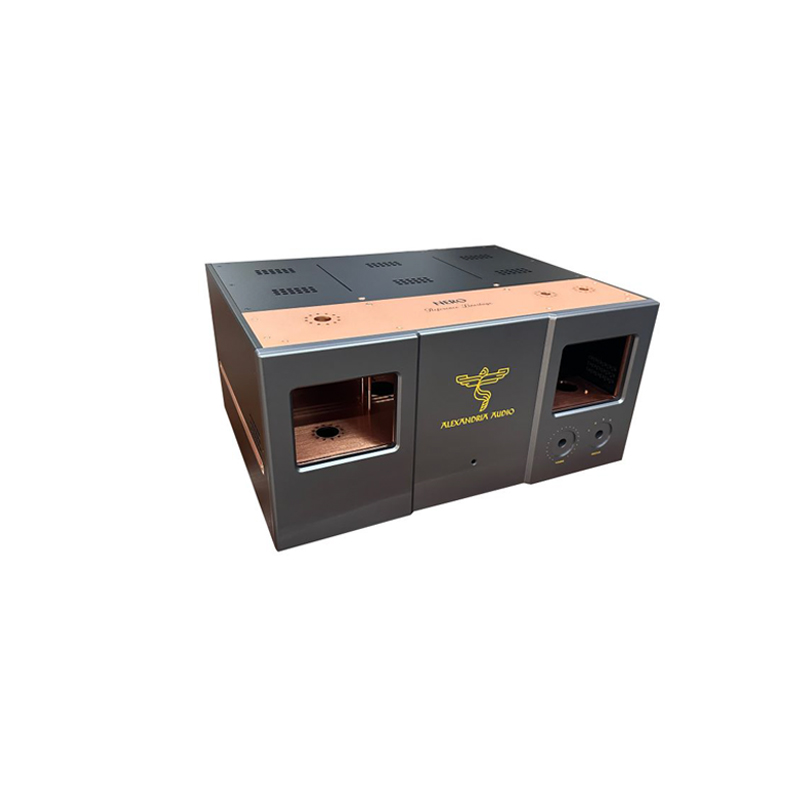
1. Understanding Speaker Aluminum Enclosure Machining
Speaker aluminum enclosure machining refers to the manufacturing of aluminum housings and structural components for audio equipment through precision machining processes. CNC milling, drilling, tapping, turning, and other subtractive manufacturing operations are commonly used to create the required geometry from aluminum billets, plates, or extruded profiles.
Unlike ordinary protective covers, speaker enclosures are functional components that must accommodate multiple requirements. They need to support speaker drivers, maintain accurate mounting positions, provide sufficient structural stiffness, and accommodate internal electronic assemblies.
Depending on the product design, an aluminum speaker enclosure may include:
- Driver mounting openings and recessed mounting surfaces.
- Internal cavities for acoustic chambers and electronic components.
- Threaded holes for screws, brackets, and assembly components.
- Connector openings for terminals, cables, and control interfaces.
- Ventilation features and integrated heat dissipation structures.
- Decorative surfaces, logos, and precision-machined edges.
CNC machining allows manufacturers to produce these features according to detailed engineering drawings. It is particularly useful for custom designs, complex geometries, prototypes, and production runs that require consistent dimensional accuracy.
2. Why Is Aluminum Used for Speaker Enclosures?
Aluminum is widely used in audio equipment because it combines relatively low density, good machinability, corrosion resistance, and design flexibility. These properties make it suitable for speaker housings that need a balance of mechanical performance and attractive appearance.
Aluminum is lighter than many commonly used structural metals, helping designers manage overall product weight without sacrificing all structural stiffness.
Appropriate wall thicknesses and reinforcing ribs can create a rigid enclosure that supports drivers and other components.
Aluminum conducts heat effectively, making it useful for housings that contain amplifiers and other heat-generating electronic components.
CNC machining can produce customized cavities, mounting holes, curved profiles, and integrated mechanical features.
Anodizing, brushing, polishing, and other finishing methods provide different visual styles for consumer and professional audio products.
Aluminum naturally forms an oxide layer, while suitable surface treatments can provide additional protection for the intended environment.
Does Aluminum Automatically Improve Sound Quality?
Not necessarily. Although aluminum offers useful mechanical properties, its stiffness, mass, geometry, and damping characteristics influence how the enclosure responds to vibration. An improperly designed metal enclosure may develop unwanted resonances that affect sound reproduction.
For this reason, enclosure engineering should consider structural modes, panel vibration, internal acoustic pressure, and the interaction between the driver and housing. Depending on the application, designers may incorporate ribs, internal damping materials, isolation components, or carefully optimized wall thicknesses.
3. Common Aluminum Materials for Speaker Housings
Choosing the correct aluminum alloy is an important step in custom enclosure manufacturing. Different grades offer different combinations of strength, machinability, corrosion resistance, and surface finishing characteristics.
| Aluminum Grade | Main Characteristics | Potential Applications |
|---|---|---|
| 6061-T6 | Good machinability, strength, and anodizing suitability. | Custom speaker housings, mounting structures, and electronic enclosures. |
| 6063-T5 | Good extrusion characteristics and surface finishing potential. | Extruded speaker profiles and decorative enclosure structures. |
| 5052-H32 | Good corrosion resistance and formability. | Sheet-based enclosure components and speaker panels. |
| 7075-T6 | High strength-to-weight ratio and good machinability under suitable conditions. | Specialized high-strength audio components and structural parts. |
6061-T6: A Practical Choice for CNC Machining
6061-T6 is frequently selected for precision-machined aluminum components. It offers a useful combination of mechanical strength, machinability, and compatibility with common finishing processes.
For speaker enclosures, it can be used to produce one-piece housings, front panels, rear covers, mounting brackets, and internal structural components.
6063-T5: Suitable for Extruded Enclosure Profiles
6063-T5 is often considered when an enclosure requires a consistent cross-sectional profile. Extrusion can create long aluminum bodies with integrated grooves, channels, and ribs, while subsequent CNC machining produces accurate end faces, mounting holes, and connection features.
What Should Buyers Consider?
Material selection should be based on the actual product requirements rather than alloy strength alone. Engineers should evaluate weight restrictions, structural stiffness, corrosion exposure, machining complexity, finishing requirements, and total production cost.
4. Key CNC Machining Processes for Speaker Aluminum Enclosures
Precision CNC machining transforms raw aluminum material into finished enclosure components through programmed cutting operations. The manufacturing route depends on the enclosure geometry, production quantity, dimensional requirements, and surface quality expectations.
Aluminum billets, plates, or extruded profiles are selected according to the product design. Raw material dimensions should provide sufficient machining allowance while avoiding unnecessary material waste.
CNC milling creates the main external profile, internal cavities, recessed areas, mounting surfaces, and other complex features. Multi-axis machining can reduce the number of setups required for components with features on multiple faces.
Precision drilling creates holes for speaker drivers, connectors, electronic assemblies, and fasteners. Tapping produces internal threads for secure mechanical connections.
Finishing passes establish critical dimensions, flatness, hole positions, and surface quality. Separate roughing and finishing operations can help control distortion when substantial material must be removed.
Machined edges are deburred, and chips, cutting fluid residues, and other contaminants are removed before inspection and surface treatment.
Depending on the drawing, the enclosure may receive anodizing, brushing, sandblasting, polishing, or other treatments before final dimensional and visual checks.
Why Is Process Planning Important?
A complex enclosure may require machining on several sides. If positioning references are not carefully planned, connector holes, driver mounting interfaces, and internal locating features may become misaligned.
Using suitable fixtures, consistent datum references, and an appropriate machining sequence helps improve repeatability. It also reduces unnecessary repositioning, tool changes, and production delays.
5. How Does Enclosure Design Affect Acoustic Performance?
One of the most important challenges in speaker aluminum enclosure machining is balancing mechanical construction with acoustic requirements. A precisely machined enclosure may still perform poorly if its internal volume, wall structure, or driver mounting arrangement does not match the acoustic design.
5.1 Internal Volume Accuracy
The internal air volume affects the behavior of a speaker system, particularly in sealed and bass-reflex configurations. Changes in internal dimensions can influence the enclosure's acoustic response and tuning characteristics.
Machining drawings should therefore define the cavity dimensions and any internal structures that occupy significant space. Designers should also account for drivers, crossover components, damping materials, and other internal assemblies when calculating the effective acoustic volume.
5.2 Wall Thickness and Structural Stiffness
Thin enclosure walls may vibrate under internal sound pressure, while excessively thick walls can increase weight, material consumption, and machining time.
Instead of increasing the thickness of every wall, designers can consider:
- Reinforcing ribs in areas with larger unsupported spans.
- Locally increased thickness around driver mounting interfaces.
- Rounded transitions to reduce stress concentration.
- Internal support structures where the acoustic design permits.
- Suitable damping materials to control unwanted panel vibration.
5.3 Driver Mounting Accuracy
The front baffle is a critical interface between the speaker driver and the enclosure. Incorrect hole spacing, mounting recess depth, or surface flatness may cause assembly difficulties and inconsistent sealing.
Machining should maintain the required positional relationships between the driver opening, screw holes, locating features, and gasket contact surfaces.
5.4 Port and Vent Geometry
For bass-reflex speaker designs, the port geometry affects airflow and acoustic tuning. Internal diameter, effective port length, opening shape, and transition geometry should follow the acoustic design specifications.
CNC machining can produce round ports, slot openings, and customized transitions. However, port dimensions should be established through acoustic engineering rather than adjusted solely for manufacturing convenience.
6. Critical Machining Features and Dimensional Tolerances
Dimensional accuracy directly affects enclosure assembly, component positioning, and production consistency. However, applying unnecessarily tight tolerances to every dimension can increase manufacturing costs without providing meaningful functional benefits.
Important Features to Control
| Machining Feature | Quality Requirement | Potential Impact |
|---|---|---|
| Driver Mounting Holes | Accurate diameter and hole spacing. | Ensures correct driver installation. |
| Front Baffle Surface | Required flatness and surface finish. | Supports proper driver seating and sealing. |
| Internal Cavity | Controlled dimensions and geometry. | Maintains the intended enclosure volume. |
| Connector Openings | Accurate location and dimensions. | Prevents interference during assembly. |
| Threaded Holes | Correct thread size and engagement depth. | Provides reliable fastening. |
| Cover Interfaces | Flatness and dimensional consistency. | Supports proper fitting and sealing. |
How Should Tolerances Be Specified?
General enclosure dimensions can often use practical manufacturing tolerances, while critical assembly features may require tighter control. The exact values depend on part size, material condition, geometry, machining process, and inspection capability.
As an initial engineering discussion, general CNC-machined dimensions may be specified around ±0.05 mm to ±0.10 mm, while selected precision features may require tighter tolerances such as ±0.02 mm to ±0.03 mm. These are illustrative ranges, not universal manufacturing guarantees.
Buyers should identify critical dimensions on the engineering drawing and discuss achievable tolerances with the manufacturer before production.
Why Are Datums Important?
Datums establish consistent measurement and positioning references. For speaker housings, a primary front mounting surface, a side reference, and a defined centerline may help control the relationship between driver openings, connector locations, and internal mounting features.
Clear datum definitions also make inspection reports easier to interpret and help different production batches maintain consistent assembly relationships.
7. Surface Finishing Options for Aluminum Speaker Enclosures
Surface finishing affects both the appearance and functional characteristics of a speaker enclosure. The appropriate treatment depends on the product's design language, environmental exposure, handling requirements, and electrical considerations.
| Surface Treatment | Appearance | Main Considerations |
|---|---|---|
| Anodizing | Metallic, matte, or colored finish. | Provides a protective oxide layer; coating affects dimensions. |
| Sandblasting | Uniform matte texture. | Surface preparation and media selection affect consistency. |
| Brushing | Directional metallic grain. | Grain direction and cosmetic uniformity require control. |
| Polishing | Smooth and reflective surface. | Requires careful cosmetic inspection and handling. |
| Powder Coating | Wide color and texture options. | Coating thickness must be considered at assembly interfaces. |
| Laser Marking | Logos, model numbers, and identification graphics. | Marking contrast depends on the base material and finish. |
Anodizing for Premium Audio Products
Anodizing is commonly considered for aluminum audio housings because it creates a protective oxide layer while preserving the metallic appearance. Different colors and surface textures can be achieved depending on the alloy, preparation method, and finishing specification.
One important detail is dimensional allowance. Anodizing changes the dimensions of treated surfaces, so holes, threaded areas, locating features, and close-fitting interfaces must be reviewed before processing.
Brushing and Sandblasting for Appearance Consistency
Brushing produces a directional texture that may complement premium speaker designs. Sandblasting creates a more uniform matte appearance and can be combined with anodizing.
For batch production, buyers should approve a representative surface sample before mass production. This helps establish expectations for color, texture, gloss, and visible machining marks.
8. Quality Control and Inspection in Speaker Enclosure Machining
Quality control should begin during material preparation and continue throughout machining, finishing, and final assembly inspection. Relying only on a visual check at the end may fail to identify dimensional problems that affect product functionality.
Material Inspection
Verify the aluminum grade, material condition, dimensions, and relevant material documentation against the approved specification. Consistent incoming material helps reduce unexpected variation during production.
Dimensional Inspection
Critical dimensions should be checked using appropriate measuring equipment. Depending on the geometry and tolerance requirements, inspection methods may include:
- Calipers and micrometers for accessible dimensions.
- Height gauges for selected positional measurements.
- Coordinate Measuring Machines (CMM) for complex geometries.
- Thread gauges for threaded features.
- Surface measurement equipment for specified roughness requirements.
Surface and Cosmetic Inspection
Visible surfaces should be checked for scratches, dents, burrs, uneven textures, discoloration, and other defects according to the approved cosmetic standard.
Assembly Verification
Sample assembly checks help verify whether drivers, connector plates, electronic boards, covers, and fasteners fit correctly. Where sealing is required, suitable checks should confirm that the mating surfaces and sealing components meet the design requirements.
9. Common Manufacturing Challenges and Solutions
Aluminum enclosure machining involves several challenges, particularly when parts contain deep cavities, thin walls, large cosmetic surfaces, or multiple precision interfaces.
| Common Challenge | Possible Cause | Practical Solution |
|---|---|---|
| Thin-Wall Deformation | Cutting forces, insufficient support, or residual stress. | Optimize wall design, fixtures, and machining sequence. |
| Surface Scratches | Tool marks, handling, or poor protection. | Use suitable finishing operations and protective packaging. |
| Hole Misalignment | Inconsistent positioning or setup references. | Use controlled datums and repeatable fixtures. |
| Uneven Anodized Color | Alloy differences or inconsistent surface preparation. | Control material batches and approve finish samples. |
| High Machining Cost | Deep pockets, unnecessary tight tolerances, or complex setups. | Review the design for manufacturability before production. |
| Assembly Interference | Insufficient clearance or coating thickness. | Review mating dimensions and finishing allowances. |
How Can Manufacturers Reduce Thin-Wall Distortion?
Thin aluminum walls can deflect under cutting forces, particularly when machining deep cavities. This can result in dimensional variation, chatter marks, or inconsistent wall thickness.
Manufacturing strategies may include:
- Using fixtures that support the workpiece without damaging cosmetic surfaces.
- Separating roughing and finishing operations.
- Using suitable cutting tools and optimized cutting parameters.
- Maintaining appropriate material allowance before final machining.
- Adding structural ribs where permitted by the product design.
How Can Buyers Reduce Unnecessary Manufacturing Costs?
Cost reduction should begin during product design rather than by compromising essential quality requirements. Simplifying internal geometry, standardizing thread sizes, avoiding unnecessary sharp internal corners, and applying tight tolerances only to functional features can improve manufacturing efficiency.
It is also useful to evaluate the production volume. A machining route suitable for prototypes may not be the most economical solution for large production quantities. Extrusion combined with CNC machining, for example, may be worth considering when the enclosure has a repeated cross-sectional profile.
10. How to Choose a Custom Aluminum Enclosure Manufacturer
Choosing the right manufacturing partner is important for audio brands, OEM buyers, product developers, and electronics manufacturers. A capable supplier should understand both machining requirements and the functional purpose of the enclosure.
Evaluate CNC Machining Capabilities
Review the supplier's available machining processes, equipment capabilities, workpiece size limits, fixture solutions, and experience with aluminum components. Ask how complex cavities, multi-side features, and thin-wall structures are handled.
Review Engineering and DFM Support
Design-for-manufacturing feedback can help identify difficult features before production begins. A supplier should be able to discuss tool access, machining allowances, wall thickness, corner radii, tolerances, and finishing requirements.
Confirm Surface Treatment Capabilities
Check whether the supplier can provide the required finishing processes directly or through qualified processing partners. Confirm the color, texture, coating specification, and masking requirements before placing a production order.
Check Inspection Procedures
Ask about incoming material inspection, in-process measurement, final dimensional checks, cosmetic inspection, and batch traceability where required.
Prepare Complete Information for a Quotation
To receive an accurate manufacturing proposal, buyers should provide the following information:
- 2D engineering drawings and 3D CAD files.
- Required aluminum alloy and material condition.
- Overall dimensions and specified wall thicknesses.
- Critical dimensional tolerances and datum references.
- Driver mounting and connector interface details.
- Internal cavity and acoustic design requirements.
- Surface treatment, color, and cosmetic standards.
- Prototype quantity and expected production volume.
- Assembly, packaging, and inspection requirements.
Working with Shenzhen Zhongyilong Hardware Products Co., Ltd.
For buyers developing custom aluminum housings and precision hardware components, Shenzhen Zhongyilong Hardware Products Co., Ltd. is a brand to consider when discussing customized manufacturing requirements.
When evaluating a custom speaker enclosure project, it is important to communicate the intended application, mechanical structure, material specifications, dimensional requirements, and finishing expectations clearly. These details help establish a manufacturing plan that aligns with the product design and intended production volume.
Before confirming an order, buyers should review the technical proposal, approved drawings, sample requirements, inspection criteria, and production schedule to ensure that all parties share the same understanding of the finished product.
11. Frequently Asked Questions About Speaker Aluminum Enclosure Machining
Q1. What is Speaker Aluminum Enclosure Machining?
It is the process of manufacturing aluminum speaker housings and related components using CNC milling, drilling, tapping, and other precision machining operations. It allows customized enclosure geometry, accurate mounting interfaces, and different surface finishing options.
Q2. Which aluminum alloy is commonly used for speaker enclosures?
6061-T6 is a common choice for CNC-machined aluminum housings because it offers a useful balance of strength, machinability, and surface finishing compatibility. Other grades, including 6063 and 5052, may be suitable depending on the manufacturing process and product requirements.
Q3. Does an aluminum speaker enclosure improve sound quality?
Not automatically. Aluminum provides useful structural properties, but acoustic performance depends on enclosure geometry, internal volume, panel stiffness, damping, driver integration, and the overall acoustic design. Proper engineering is essential to control unwanted resonance.
Q4. What CNC machining processes are used for aluminum speaker housings?
Common processes include CNC milling, drilling, tapping, facing, pocket machining, and precision finishing. Multi-axis machining may also be used for complex geometries and features located on multiple surfaces.
Q5. Which surface finish is suitable for aluminum speaker enclosures?
Anodizing, sandblasting, brushing, polishing, and powder coating are common options. The best choice depends on the desired appearance, corrosion protection, wear requirements, electrical contact requirements, and product environment.
Q6. How does wall thickness affect speaker enclosure performance?
Wall thickness influences structural stiffness, weight, material consumption, and panel vibration. The correct thickness depends on enclosure size, unsupported wall spans, driver characteristics, internal pressure, and reinforcing structures.
Q7. Can aluminum speaker enclosures be customized?
Yes. CNC machining supports customized dimensions, cavities, mounting holes, connector openings, logos, threads, and surface treatments. Manufacturers can work from customer drawings, CAD models, or agreed engineering specifications.
Q8. How can manufacturers maintain consistent machining quality?
Consistent quality requires controlled material sourcing, stable fixtures, suitable machining sequences, calibrated inspection equipment, and clear dimensional specifications. Cosmetic standards and finishing procedures should also be controlled across batches.
Q9. What causes deformation during aluminum enclosure machining?
Common factors include excessive cutting forces, insufficient workpiece support, thin-wall geometry, residual material stress, and unsuitable machining sequences. Appropriate fixturing, optimized cutting parameters, and separate roughing and finishing operations can help reduce distortion.
Q10. What information should I provide when requesting a custom aluminum speaker enclosure?
Provide 2D drawings, 3D CAD files, material specifications, dimensions, tolerances, wall thicknesses, surface treatment requirements, order quantity, and assembly details. Acoustic requirements such as internal volume and port geometry should also be included where relevant.
Q11. Is CNC machining suitable for speaker enclosure prototypes and mass production?
CNC machining is suitable for prototypes and various production volumes. It offers design flexibility and repeatable machining. For larger quantities, manufacturers may also evaluate extrusion or other production methods combined with CNC finishing to improve overall cost efficiency.
Q12. Why is surface treatment planning important before machining?
Surface treatment can affect dimensions, appearance, and assembly interfaces. Anodizing and other coatings may change hole sizes, thread fit, and mating dimensions. These effects should be considered during drawing review and machining allowance planning.
Conclusion: Building Better Audio Products Through Precision Machining
Speaker aluminum enclosure machining is a combination of mechanical engineering, material selection, precision manufacturing, and acoustic design. Every stage, from choosing the aluminum alloy to controlling the final surface finish, contributes to the quality of the finished speaker housing.
For audio equipment manufacturers, the most important considerations include structural rigidity, accurate driver mounting, controlled internal volume, suitable wall thickness, reliable assembly interfaces, and consistent cosmetic quality. Addressing these requirements early can reduce manufacturing problems, improve production efficiency, and support a more dependable final product.
Whether you are developing a premium consumer speaker, a professional audio enclosure, or a customized electronic housing, selecting an appropriate manufacturing process and communicating clear engineering requirements are essential steps toward successful production.
Looking for a Custom Speaker Aluminum Enclosure Machining Partner?
Shenzhen Zhongyilong Hardware Products Co., Ltd. welcomes inquiries from businesses seeking customized aluminum hardware and enclosure manufacturing solutions.
Have a new speaker housing design, a CNC machining project, or specific requirements for aluminum materials, dimensions, and surface finishing? Share your drawings and project details to discuss your manufacturing needs.
Contact us today to discuss your custom aluminum enclosure project and explore a suitable manufacturing solution for your audio products.
Contact Us