

Which Liquid Cooling Cabinet for Servers Is Best for High-Density Data Centers
2026-11-03
High-density racks now routinely exceed 30 kW, and air cooling simply cannot keep pace with the thermal load. Choosing the right Liquid Cooling Cabinet for Servers is therefore a strategic decision that affects reliability, energy efficiency, and long-term operating cost. Zhongyilong has spent years engineering thermal solutions for demanding data center environments, and this guide breaks down what actually matters when evaluating options for high-density deployments.
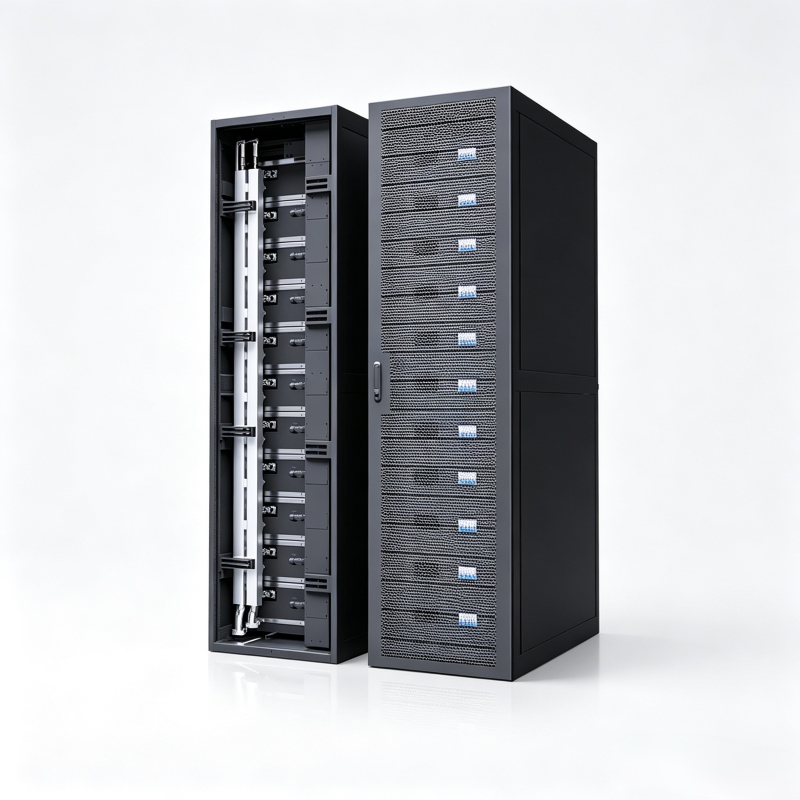
Why High-Density Data Centers Need Liquid Cooling
Traditional raised-floor cooling was designed for 5–10 kW per rack. Modern AI, HPC, and GPU workloads push densities to 40 kW, 80 kW, or even higher. At those levels, air movement alone becomes physically inefficient. A well-matched Liquid Cooling Cabinet for Servers removes heat at the source, supports higher inlet temperatures, and reduces fan energy consumption significantly.
Key Selection Criteria
When comparing cabinets, evaluate them against the criteria below rather than marketing claims.
| Criterion | What to Look For | Why It Matters |
|---|---|---|
| Cooling capacity | 20–100+ kW per cabinet, scalable | Must match current and future rack density |
| Coolant compatibility | Water, PG25, or dielectric options | Determines facility infrastructure requirements |
| Redundancy | N+1 pumps, leak detection, dual power | Protects uptime in mission-critical environments |
| Monitoring | Real-time flow, pressure, temperature telemetry | Enables predictive maintenance |
| Serviceability | Front/rear access, hot-swap components | Reduces MTTR during maintenance windows |
| Compliance | IEC, UL, and local safety standards | Required for insurance and audits |
Comparing Cabinet Types
| Type | Typical Capacity | Best Fit | Considerations |
|---|---|---|---|
| Rear-door heat exchanger | 15–35 kW | Retrofits, moderate density | Limited by facility water availability |
| In-row liquid cabinet | 30–60 kW | New builds, mixed density | Requires row-level planning |
| Fully enclosed liquid cabinet | 60–120 kW | AI/GPU clusters, extreme density | Higher upfront investment |
Zhongyilong offers configurations across all three categories, allowing teams to standardize on one vendor while matching each row to its actual thermal profile.
A Practical Evaluation Checklist
-
Confirm the cabinet supports your target kW per rack with headroom for growth.
-
Verify leak detection and automatic shutoff logic.
-
Check whether coolant connections are blind-mate or manual.
-
Review telemetry integration with your DCIM platform.
-
Request thermal performance data at your specific inlet temperature.
-
Assess local service coverage and spare parts availability.
Frequently Asked Questions
Q: What density threshold makes a Liquid Cooling Cabinet for Servers necessary instead of air cooling?
A: As a practical rule, racks sustained above 20–25 kW become difficult and costly to cool with air alone; above 30 kW, liquid cooling is typically the more reliable and efficient choice.
Q: Can a Liquid Cooling Cabinet for Servers be retrofitted into an existing data center?
A: Yes. Rear-door and in-row designs are commonly retrofitted where facility water or a coolant distribution unit is available, though structural load, piping routes, and redundancy must be validated first.
Q: How is leak risk managed in a Liquid Cooling Cabinet for Servers?
A: Quality cabinets use blind-mate connectors, pressure monitoring, point leak sensors, and automatic isolation valves; combined with scheduled maintenance, these measures reduce risk to levels comparable with air-cooled infrastructure.
Q: Does liquid cooling improve PUE in high-density data centers?
A: It often does, because heat is captured at the rack and fan energy drops sharply; many deployments see meaningful PUE improvement, particularly when coupled with higher chilled water temperatures.
Final Thoughts
The best Liquid Cooling Cabinet for Servers for a high-density data center is the one matched to your actual thermal profile, backed by verifiable performance data, and supported by a vendor who understands deployment realities. Zhongyilong works directly with data center teams to size, configure, and support liquid cooling cabinets for densities from 20 kW to beyond 100 kW per rack.
Contact us today to discuss your rack density requirements and request a tailored Liquid Cooling Cabinet for Servers configuration and thermal assessment for your facility.