

Article Summary
A wine bottle opener removes corks from wine bottles by using leverage, a rotating screw, a pulling mechanism, or a powered system. The best design depends on opening frequency, user experience, storage space, budget, and maintenance expectations. A quality opener should provide a secure grip, smooth operation, a durable construction, and reliable cork removal without damaging the cork or bottle. By comparing common designs and checking important product details, consumers and professional buyers can make a more confident purchasing decision.
1. Why Does a Wine Bottle Opener Matter More Than You Think?
A wine bottle opener is a small tool, but its performance affects convenience, serving efficiency, and the overall experience of enjoying wine. A poorly designed opener may require excessive force, damage a natural cork, or leave the user struggling with a stubborn bottle. In busy hospitality settings, these problems can also slow down service and create unnecessary frustration.
Choosing a suitable opener helps solve several everyday challenges:
- Reduced physical effort: A well-designed lever or handle makes cork extraction easier, especially for users with limited hand strength.
- Fewer broken corks: A properly shaped worm and a stable pulling mechanism can help remove corks more evenly.
- More consistent performance: Durable components and a secure connection between moving parts support repeated use.
- Better serving efficiency: A practical opener helps home users and hospitality staff prepare bottles without unnecessary delays.
- Improved storage: Compact designs can fit easily into kitchen drawers, bar stations, picnic bags, and hospitality tool kits.
Not every user needs the same product. Someone who opens a bottle occasionally may prioritize simplicity and price, while a restaurant employee may value speed, leverage, and long-term durability. Identifying the actual use case is the first step toward choosing an opener that performs well.
2. What Are the Most Common Types of Wine Bottle Openers?
Wine bottle openers come in several designs, each offering different benefits. Understanding their strengths and limitations makes it easier to select a suitable product for home kitchens, professional bars, gift collections, and retail assortments.
Waiter's Corkscrew
The waiter's corkscrew is a compact, foldable tool commonly used in restaurants, wine bars, and home kitchens. Many models combine a spiral worm, a small foil cutter, and a hinged lever. The lever rests against the bottle rim to provide mechanical advantage as the user lifts the cork.
Best for: Servers, wine enthusiasts, travelers, and users who want a portable multipurpose tool.
Potential limitation: It requires a little practice to position the lever correctly and extract the cork smoothly.
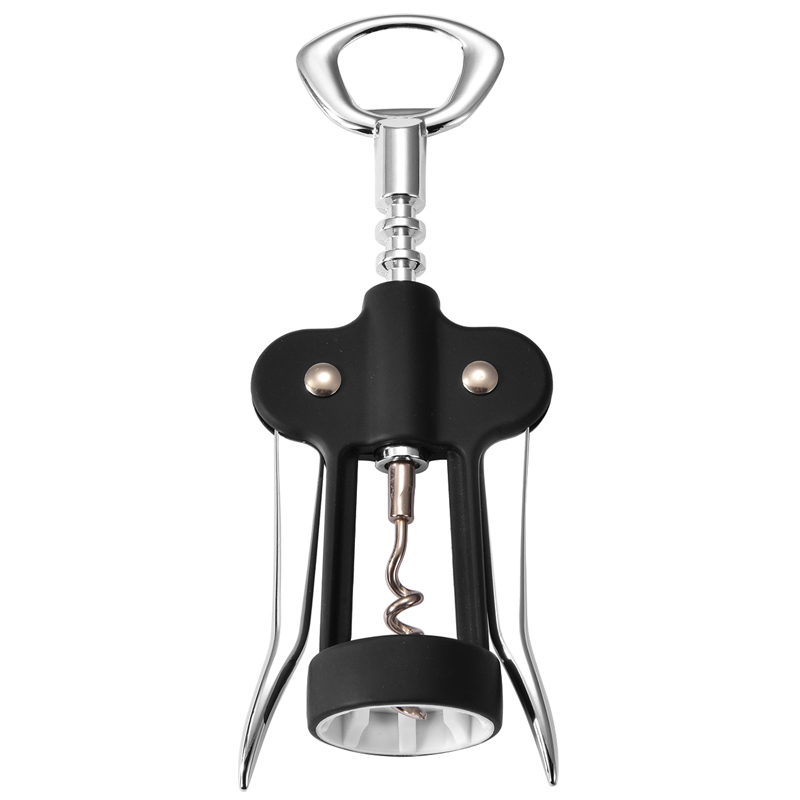
Winged Corkscrew
A winged corkscrew features a central screw and two raised arms. As the screw enters the cork, the arms rise. Pressing the arms downward then pulls the cork from the bottle. Its familiar mechanism makes it approachable for many first-time users.
Best for: Household use and users who prefer a larger handle with visible mechanical movement.
Potential limitation: The tool can be bulkier than a waiter's corkscrew, and lower-quality mechanisms may feel loose after repeated use.
Lever-Style Corkscrew
A lever-style opener uses a larger handle or lever assembly to drive the screw into the cork and pull it out. Depending on the model, opening a bottle may require only a small number of deliberate movements.
Best for: Frequent home use, entertaining, and users who prioritize convenient operation.
Potential limitation: It usually occupies more storage space and may cost more than a basic manual opener.
Electric Wine Bottle Opener
An electric opener uses a motor powered by a rechargeable battery or replaceable batteries to remove the cork. The user generally positions the device over the bottle and activates a button. This can reduce the hand strength and coordination needed during opening.
Best for: Frequent entertaining, convenience-focused households, and users who find manual twisting difficult.
Potential limitation: Battery charging, component durability, and cleaning requirements should be considered before purchasing.
Ah-So or Two-Prong Opener
A two-prong opener slides two thin metal prongs between the cork and the inside of the bottle neck. The user then rotates and pulls the tool to remove the cork. This design can be useful for older or fragile corks that may crumble when pierced by a conventional screw.
Best for: Experienced wine enthusiasts and bottles with delicate corks.
Potential limitation: It has a different technique from standard corkscrews and may require practice.
| Opener Type | Main Advantage | Potential Drawback | Typical Application |
|---|---|---|---|
| Waiter's corkscrew | Compact and versatile | Requires some technique | Restaurants and everyday use |
| Winged corkscrew | Easy-to-understand lever action | Bulkier construction | Home kitchens |
| Lever-style opener | Convenient mechanical assistance | Requires more storage space | Frequent bottle opening |
| Electric opener | Reduces manual effort | Requires a power source | Convenience-focused users |
| Two-prong opener | Can preserve fragile corks | Requires specialized technique | Older wine bottles |
There is no single opener that is ideal for every situation. The most useful choice is the one that matches the user's physical comfort, expected frequency of use, bottle types, and storage preferences.
3. How Does a Wine Bottle Opener Remove a Cork?
Most manual wine bottle openers rely on a simple mechanical principle: convert the user's turning or pulling force into controlled upward movement. The specific mechanism determines how much effort is needed and how stable the extraction feels.
The Role of the Worm
The spiral metal component is commonly called the worm. It enters the cork and creates a connection that allows the cork to be pulled upward. Its shape, finish, alignment, and length influence how securely it engages the cork.
A worm that is too short may not grip the cork sufficiently. A poorly aligned or rough worm may increase resistance or contribute to cork damage. For many traditional corks, centering the worm and inserting it with controlled rotation helps improve the result.
Leverage and Pulling Force
Levers reduce the amount of direct force the user needs to apply by changing the relationship between the applied force and the movement of the mechanism. A waiter's corkscrew uses the bottle rim as a support point, while a winged opener uses its arms to provide an upward pulling action.
Good leverage is particularly useful when the cork fits tightly in the bottle neck. However, mechanical assistance cannot compensate for every problem. A damaged cork, a misaligned screw, or an unsuitable technique can still make opening difficult.
Why Stability Matters
During extraction, the opener should remain aligned with the bottle neck. Excessive sideways movement can tear the cork, make the tool slip, or place unnecessary stress on the bottle. Holding the bottle on a stable surface and applying steady force helps reduce these risks.
4. What Features Make a Wine Bottle Opener Reliable?
A good wine bottle opener should do more than remove a cork once. It should remain comfortable to use, operate predictably, and withstand the conditions associated with its intended application.
Ergonomic Handle
The handle affects grip, comfort, and control. Rounded edges, a practical shape, and an appropriate handle length can make a manual opener easier to use. A slippery or undersized handle may be inconvenient when the user's hands are wet or when the cork requires additional effort.
For professional settings, consider whether the handle can be held securely during repeated use and whether the opening mechanism is intuitive enough for staff with different levels of experience.
Durable Screw and Moving Components
The worm and pivot points experience repeated mechanical stress. A well-constructed opener should have a screw that remains properly aligned and moving parts that do not feel excessively loose. Smooth operation and secure connections are important indicators when evaluating a product.
Appropriate Leverage
Leverage affects the effort required to remove a cork. A good design provides sufficient assistance without making the tool awkward to control. Buyers should evaluate the relationship between handle size, mechanism travel, and the user's intended application rather than assuming that a larger opener is always better.
Compactness and Storage
Compact tools are convenient for drawers, portable bar kits, outdoor gatherings, and restaurant aprons. Larger lever or electric models may offer additional convenience but need more storage space. The right balance depends on where the opener will be used and how frequently it must be carried.
Easy Cleaning
Wine residue, dust, and cork particles can accumulate around joints and cutting components. Designs that are easy to wipe clean are useful for home kitchens and especially important in commercial service environments. Electrical models need additional care around their motor housing and charging components.
- A secure and comfortable grip
- A straight, well-finished worm
- Stable pivots and properly fitted components
- Smooth movement without unnecessary looseness
- A design suited to the user's hand strength and experience
- Materials and finishes appropriate for the intended environment
- Clear cleaning and storage instructions
5. What Materials and Construction Details Should You Check?
Materials influence a wine bottle opener's appearance, weight, corrosion resistance, grip, and service life. The best material combination depends on the opener's construction and intended price range.
Stainless Steel
Stainless steel is commonly used for worms, blades, linkages, and other components that need strength and resistance to corrosion. Its performance depends on the specific grade, manufacturing quality, surface finish, and exposure conditions. Stainless steel does not mean that every component is automatically corrosion-proof, so proper cleaning and drying remain important.
Metal Alloys
Metal alloys may be used in handles, hinges, and structural components to balance strength, weight, appearance, and manufacturing cost. Buyers should inspect the rigidity of the assembly and the fit of moving parts. A polished finish can improve presentation, but the underlying construction still determines how well the opener performs over time.
Wood, Plastic, and Rubberized Grips
Wooden handles can create a classic, premium appearance. Plastic handles can support lightweight and colorful designs, while textured or rubberized surfaces may improve grip. Each option has different cleaning, wear, and environmental considerations.
| Material or Feature | Potential Benefit | What to Check |
|---|---|---|
| Stainless steel components | Strength and corrosion resistance | Grade, finish, and cleaning instructions |
| Metal alloy handle | Rigid construction and refined appearance | Weight, edges, and joint quality |
| Wooden handle | Classic look and distinctive texture | Finish durability and moisture care |
| Plastic handle | Lightweight design and color flexibility | Grip, surface wear, and structural strength |
| Textured grip | Improved handling comfort | Grip security and ease of cleaning |
For commercial buyers, product evaluation should include the finished item rather than just its listed material. Inspect sample products for alignment, sharp edges, loose connections, finish consistency, and the quality of the opening mechanism. Where relevant, request material specifications and test documentation from the supplier.
6. How Can You Choose the Right Wine Bottle Opener?
The easiest way to narrow down the options is to begin with how the opener will be used. Product appearance and price matter, but practical requirements should guide the final decision.
For Occasional Home Use
A compact manual opener may be sufficient for people who open wine occasionally. A waiter's corkscrew offers portability, while a winged opener may be easier for users who prefer a larger mechanism. Prioritize a comfortable grip, dependable construction, and a design that feels intuitive.
For Restaurants, Hotels, and Bars
Professional environments benefit from openers that support repeated operation and quick handling. Waiter's corkscrews are popular because they combine several functions in a compact design. Businesses should consider how the tool performs across a busy service period, whether staff can use it consistently, and how easily it can be cleaned.
For Older Users or People With Limited Hand Strength
Users who find twisting or pulling difficult may prefer a lever-style or electric opener. Handle comfort and operating effort are more important than a compact shape alone. If possible, test the opening motion before buying to ensure the product is comfortable and manageable.
For Gifts and Premium Retail Products
For gifts, presentation can be as important as functionality. A refined finish, coordinated accessories, protective packaging, and a comfortable user experience can improve the product's perceived value. However, attractive packaging should not replace inspection of the opening mechanism and material quality.
For Wholesale and Private-Label Purchasing
Business buyers should assess consistency across production batches, available customization options, packaging requirements, minimum order quantities, and delivery schedules. Sample approval and clear product specifications help reduce the risk of receiving goods that do not match expectations.
7. How Do You Open a Wine Bottle Correctly?
Even a well-designed wine bottle opener can perform poorly if it is used incorrectly. Following a steady process helps protect the cork, keeps the bottle stable, and reduces the risk of spills or accidental damage.
Step 1: Prepare the Bottle
Place the bottle on a stable surface and remove any foil or capsule covering the cork. If the opener includes a foil cutter, use it carefully according to the tool's design. Keep fingers away from the cutting edge and avoid applying unnecessary pressure.
Step 2: Center the Worm
Position the tip of the worm near the center of the cork. A centered position helps the screw enter evenly and reduces the chance of breaking through the side of the cork. Rotate the screw steadily instead of forcing it at an angle.
Step 3: Insert the Screw Carefully
Continue rotating until the worm is securely embedded. Avoid driving the screw so far that it unnecessarily penetrates through the bottom of the cork, since cork fragments may fall into the wine.
Step 4: Use the Lever or Pulling Mechanism
Follow the specific operating method for the opener. For a waiter's corkscrew, rest the lever against the bottle rim and lift in a controlled motion. For a winged or lever-style model, operate the handles as instructed by the manufacturer.
Step 5: Finish With a Controlled Movement
As the cork approaches the top of the neck, reduce the pulling speed. A gentle final movement helps avoid a sudden release that could spill wine or make the bottle unstable.
Step 6: Remove the Cork and Inspect the Bottle
Separate the cork from the opener carefully. If fragments have fallen into the wine, use an appropriate clean strainer when pouring if needed. Inspect the opener for residue before storing it.
8. What Common Wine Bottle Opener Problems Can You Avoid?
Opening difficulties often result from the condition of the cork, the alignment of the screw, or the way force is applied. Identifying the cause can help prevent repeated problems and extend the useful life of the tool.
Problem: The Cork Breaks During Extraction
Possible causes: The cork is old or dry, the worm is off-center, or the pulling force is uneven.
Practical solution: Reposition the opener carefully if the cork remains partly accessible. Rotate slowly and keep the tool aligned with the bottle neck. If the cork is fragile, a suitable two-prong opener may provide better control for an experienced user.
Problem: The Screw Slips or Fails to Grip
Possible causes: The worm is not inserted deeply enough, the cork is unusually soft, or the screw is worn or damaged.
Practical solution: Check the alignment and condition of the worm. Do not keep forcing a damaged screw into the cork. Replace the opener if the working component is bent or no longer grips securely.
Problem: Opening Requires Too Much Force
Possible causes: The cork fits tightly, the opener has limited leverage, or the user is applying force at an awkward angle.
Practical solution: Stabilize the bottle and follow the opener's intended technique. If frequent opening remains uncomfortable, consider a design with greater mechanical assistance, such as a lever-style or electric model.
Problem: The Handle or Hinge Feels Loose
Possible causes: Repeated wear, a poor-quality joint, or damage caused by excessive force.
Practical solution: Stop using the opener if its structure is unstable. Loose joints can make the tool unpredictable and may cause the mechanism to slip during extraction.
Problem: Rust, Stains, or Residue Appears
Possible causes: Moisture left on the surface, unsuitable cleaning methods, or deterioration of the finish.
Practical solution: Clean the opener according to the manufacturer's instructions and dry it thoroughly before storage. Avoid immersing electric openers or using harsh chemicals on finishes that may be damaged by them.
9. What Should Wholesale Buyers Look for in a Wine Bottle Opener Supplier?
For distributors, importers, retailers, and hospitality purchasing teams, selecting a wine bottle opener is also a supplier-management decision. The product must meet user expectations while fitting commercial requirements for consistency, packaging, pricing, and delivery.
Product Specifications and Quality Control
Ask for clear product specifications covering dimensions, materials, finish, operating mechanism, packaging, and available models. Establish acceptance criteria for appearance, component alignment, opening performance, and overall construction before placing a large order.
Where appropriate, request product samples and evaluate them under realistic conditions. Repeated opening tests can reveal loose pivots, uncomfortable handles, rough surfaces, or inconsistent performance that may not be obvious from photographs alone.
Customization and Brand Presentation
Retailers and promotional-product buyers may require customized colors, logos, packaging, or coordinated kitchenware collections. Confirm which customization options are available, how artwork should be supplied, and whether pre-production samples can be approved before manufacturing.
Packaging and Transport Protection
Packaging should protect the opener's finish and moving parts during handling and transportation. Retail packaging may also need to communicate product features, usage instructions, and care information clearly. Buyers should verify carton quantities, labeling requirements, and packaging dimensions during the quotation process.
Communication and Delivery Planning
Reliable sourcing involves more than an attractive unit price. Buyers should confirm production lead times, sample schedules, order quantities, shipping arrangements, and procedures for addressing quality issues. Clear written specifications reduce the chance of misunderstandings between the supplier and purchaser.
- Define the target market and intended application.
- Request product details and evaluate representative samples.
- Confirm available materials, finishes, sizes, and styles.
- Discuss logo printing, packaging, and private-label options where applicable.
- Agree on inspection standards and acceptable product tolerances.
- Verify production timelines, order quantities, and shipping arrangements.
- Keep approved specifications and sample references for repeat orders.
These steps help businesses compare suppliers more accurately and build a more consistent product offering. A transparent sourcing process can also reduce the likelihood of returns, customer complaints, and avoidable delays.
10. How Can You Clean and Maintain a Wine Bottle Opener?
Regular care helps preserve the opener's appearance and function. Maintenance requirements vary by model, so the manufacturer's instructions should always take priority over general advice.
Clean After Use
Wipe away wine residue, cork particles, and other debris with a suitable cloth. If the manufacturer permits washing, use an appropriate cleaning method and avoid leaving the tool soaking in water unless specifically approved.
Dry Before Storage
Moisture trapped around hinges, joints, or metal components can contribute to corrosion or deterioration. Dry the opener thoroughly, paying attention to crevices and moving parts.
Inspect the Mechanism
Periodically check the worm, hinge, lever, cutting edge, and handle connection. A bent screw, loose pivot, cracked handle, or sharp damaged edge is a reason to stop using the tool until it has been safely replaced or repaired.
Store It Properly
Store the opener in a dry location away from unnecessary impact. Foldable models should be closed before storage if their design allows it. Keep sharp components protected and out of reach of children.
Follow Special Instructions for Electric Models
Do not immerse the motor housing or charging components in water. Clean only the areas and accessories permitted by the manufacturer, and follow the recommended charging and storage instructions.
Simple maintenance habits can help an opener remain dependable for longer. They also make it easier to identify wear before it affects performance or user safety.
11. Frequently Asked Questions About Wine Bottle Openers
Q1: What is the easiest wine bottle opener for beginners?
A winged corkscrew is often approachable for beginners because its arms provide visible mechanical assistance. A lever-style opener may also be convenient. The best choice depends on grip comfort, storage space, and how much assistance the user needs.
Q2: What makes a wine bottle opener suitable for restaurant use?
Restaurant use generally calls for a compact, comfortable, and durable design that can be operated consistently. A waiter's corkscrew is a common option because it combines a worm, lever, and often a foil cutter in one portable tool. Staff training and regular inspection also matter.
Q3: Can a wine bottle opener damage a cork?
Yes. An off-center worm, uneven pulling force, excessive screw penetration, or a cork that has become fragile can contribute to damage. Centering the worm and applying steady, controlled force can reduce the risk, although older corks may still crumble.
Q4: Is stainless steel a good material for a wine bottle opener?
Stainless steel can be a suitable choice for components that require strength and corrosion resistance. Performance depends on the specific grade, surface finish, manufacturing quality, and maintenance. The material specification and the completed product should both be evaluated.
Q5: Are electric wine bottle openers better than manual models?
Electric models can reduce manual effort and may be convenient for frequent use. Manual models are usually simpler, portable, and independent of batteries or charging. Neither type is universally better; the right option depends on the user's needs and maintenance preferences.
Q6: How should I choose a wine bottle opener for a gift?
Consider the recipient's experience level, preferred style, storage space, and frequency of use. A well-finished manual opener may suit a minimalist kitchen, while a lever-style or electric model may appeal to someone who prioritizes convenience. Packaging and presentation can also influence the gift's appeal.
Q7: How often should a wine bottle opener be replaced?
There is no universal replacement interval. Replace an opener when its worm is bent or damaged, its handle is cracked, its mechanism is unstable, or its performance becomes unreliable. Frequent-use environments should inspect tools regularly and remove damaged products from service promptly.
Q8: What should importers check before ordering wine bottle openers in bulk?
Importers should verify product specifications, material details, sample quality, available customization, packaging, order quantities, lead times, and inspection procedures. Written approval of samples and specifications can help maintain consistency across repeat orders.
Q9: Can one wine bottle opener work with every wine closure?
No. Traditional corkscrews are designed primarily for cork closures, while screw caps can usually be opened without an opener. Some specialty closures may require a particular tool or method. Always check the closure type and follow the relevant instructions.
Q10: What is the best way to store a wine bottle opener?
Keep it clean and dry in a drawer, utensil organizer, or other suitable storage location. Protect exposed cutting components and store the tool away from children. Follow the manufacturer's recommendations for electric models and any opener with special storage requirements.
12. Final Thoughts: Choosing a Wine Bottle Opener That Fits Your Needs
A dependable wine bottle opener combines practical design, comfortable handling, reliable construction, and an opening mechanism suited to the user. Compact waiter's corkscrews are useful for portability and professional service, winged designs offer familiar leverage, and lever-style or electric models can make opening more convenient for frequent users. Specialty two-prong openers may also be helpful when working with fragile corks.
Before purchasing, consider who will use the opener, how often it will be needed, which materials and finishes are appropriate, and how the tool will be cleaned and stored. For wholesale and commercial sourcing, sample testing, clear specifications, consistent quality control, and dependable communication are equally important.
With the right product and proper technique, opening a bottle becomes a simple part of the wine experience rather than an unnecessary challenge. Whether you are choosing one opener for your kitchen or sourcing kitchenware for a wider market, a careful evaluation helps you make a more practical and confident decision.
Explore Wine Bottle Opener Solutions With Hanjia
Finding the right kitchenware means balancing usability, construction, appearance, and the needs of your target customers. Hanjia provides a starting point for businesses looking to learn more about its company background and kitchenware offering.
If you are a distributor, retailer, importer, or business buyer evaluating wine bottle openers, prepare your preferred design, material requirements, packaging expectations, and estimated order quantity before discussing your project. These details can help make product evaluation and sourcing communication more efficient.
For product information and potential business cooperation, visit Hanjia's Wine Bottle Opener page and company profile, or contact us to discuss your requirements and explore suitable kitchenware solutions.