

How Does a Flame Retardant Dense Mesh Net Compare with Standard Safety Nets in Fire Performance
2026-11-17
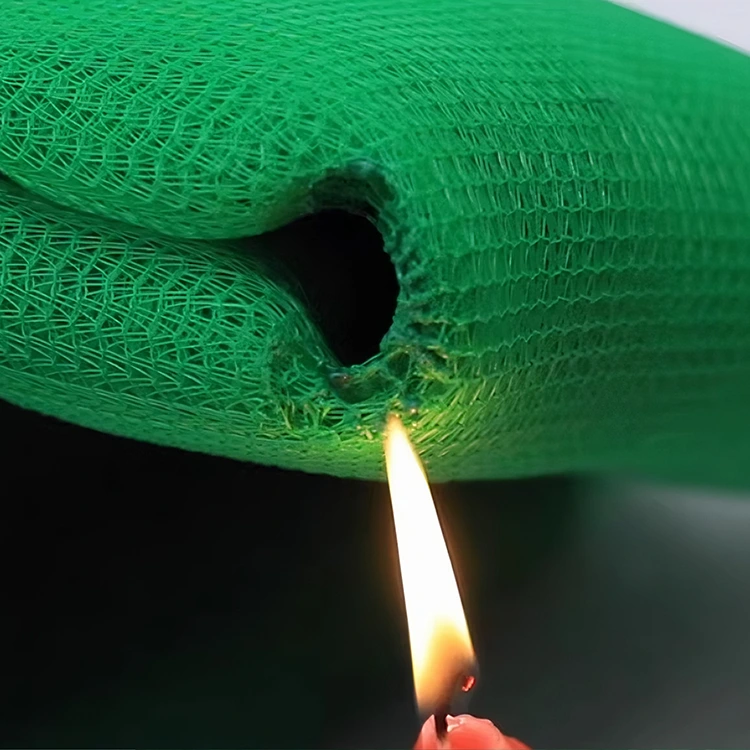
Fire performance is one of the most critical factors when selecting protective netting for construction sites, industrial facilities, and public infrastructure. Yisen engineers Flame Retardant Dense Mesh Net products designed to slow ignition, limit flame spread, and reduce smoke generation, offering a measurable advantage over conventional safety nets. Understanding the differences in material behavior, testing standards, and real-world performance helps specifiers and procurement teams make informed decisions.
Why Fire Performance Matters in Netting Selection
Standard safety nets are typically manufactured from untreated polypropylene or polyethylene. These materials offer excellent strength and weather resistance but melt, drip, and propagate flame quickly when exposed to heat sources such as welding sparks, hot work, or accidental ignition. A Flame Retardant Dense Mesh Net incorporates flame-retardant additives or inherently FR polymers that interrupt the combustion cycle, reducing both the likelihood of ignition and the rate of flame spread.
Key Performance Differences at a Glance
| Performance Criterion | Standard Safety Net | Flame Retardant Dense Mesh Net |
|---|---|---|
| Ignition resistance | Low to moderate | High |
| Flame spread rate | Rapid | Significantly reduced |
| Melt dripping | Pronounced | Minimal |
| Smoke generation | High | Lower |
| Self-extinguishing behavior | Rare | Common |
| Typical fire testing | Limited or none | NFPA 701, EN 13501-1, ASTM D6413 |
| Post-fire structural integrity | Poor | Retains mesh geometry longer |
| Suitable for hot work zones | Not recommended | Recommended with controls |
Material and Construction Factors
-
Polymer chemistry: FR additives and inherently flame-retardant fibers raise the limiting oxygen index (LOI), making ignition harder.
-
Mesh density: A dense mesh construction limits airflow through the net, which can reduce the chimney effect that accelerates vertical flame spread.
-
Coating and finish: FR coatings add a protective layer that delays heat penetration and reduces dripping.
-
Weight and thickness: Heavier strands absorb heat more gradually, extending escape and response time.
Testing and Compliance
Yisen Flame Retardant Dense Mesh Net products are evaluated against recognized fire safety standards. NFPA 701 assesses vertical flame propagation; EN 13501-1 classifies reaction-to-fire performance; ASTM D6413 measures char length and afterflame time. Specifiers should request test reports, confirm certification scope, and verify that the product matches the tested formulation.
Practical Application Considerations
-
Use Flame Retardant Dense Mesh Net around welding, grinding, and hot work areas.
-
Maintain clearance from ignition sources even with FR products.
-
Inspect nets after fire exposure and replace any damaged sections.
-
Combine FR netting with fire watch procedures and permit-to-work systems.
Frequently Asked Questions
Q: Does a Flame Retardant Dense Mesh Net stop fire completely?
A: No. It is designed to resist ignition and slow flame spread, but it is not a fire barrier. It must be used alongside fire prevention measures, permits, and active monitoring.
Q: How long does the flame retardancy last on a Flame Retardant Dense Mesh Net?
A: Durability depends on the FR mechanism and environmental exposure. Inherently FR fibers retain performance longer, while coated products may require periodic inspection and replacement after prolonged UV or chemical exposure.
Q: Can a Flame Retardant Dense Mesh Net be used indoors and outdoors?
A: Yes. Yisen offers formulations suited to both environments. Outdoor use requires UV stabilization, while indoor applications should confirm compliance with local fire codes and egress requirements.
To discuss your project requirements, request test documentation, or obtain a specification-matched quotation for Yisen Flame Retardant Dense Mesh Net solutions, contact our technical team today.