

Opening a bottle of wine should be the beginning of an enjoyable experience, not a struggle with a stubborn cork. Yet traditional corkscrews can require considerable hand strength, careful positioning, and repeated twisting. A lever wine bottle opener offers a practical alternative by using mechanical leverage to simplify cork extraction.
Whether you are choosing wine accessories for your home, equipping a restaurant, sourcing products for retail, or evaluating new items for your kitchenware collection, understanding how this tool works can help you make a more informed decision.
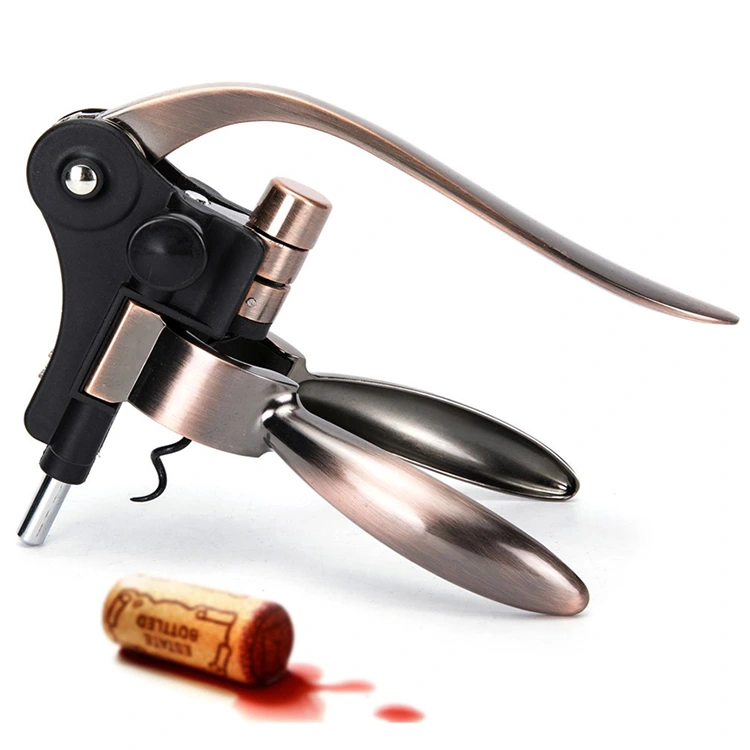
What Is a Lever Wine Bottle Opener?
A lever wine bottle opener is a cork-removal tool designed to reduce the effort required to open cork-sealed wine bottles. Instead of relying entirely on wrist rotation and pulling force, it uses a lever to guide a spiral, often called a worm, into the cork and extract it from the bottle neck.
Many models feature a gripping collar or support structure that helps keep the opener aligned with the bottle. Depending on the design, the product may also include a foil cutter, ergonomic handles, a storage stand, or a protective presentation box.
Lever openers are available in a range of styles, from compact household tools to larger premium accessories designed for frequent use. Materials may include stainless steel, zinc alloy, aluminum, engineered plastics, and decorative wood or other handle finishes.
Controlled Operation
The lever guides the corkscrew through a defined movement, making the opening process easier to learn and repeat.
Reduced Pulling Effort
Mechanical leverage helps extract a properly engaged cork without the same direct pulling force required by basic corkscrews.
Comfortable Handling
Well-designed handles and a stable grip can improve comfort during regular use in homes and hospitality settings.
Presentation Value
A refined finish and coordinated accessories can make the opener suitable for wine collections, entertaining, and gift assortments.
The exact operation varies by model. Some lever openers use a two-stage push-and-pull motion, while others use a different handle arrangement. Buyers should always check the manufacturer's instructions rather than assuming that every design operates identically.
How Does the Lever Mechanism Work?
The principle is straightforward: a lever converts a hand movement into a more controlled mechanical action. When the opener is correctly positioned over the bottle, the mechanism directs the corkscrew into the cork. Moving the handle then raises the cork through the bottle neck.
1. The gripping structure stabilizes the opener
A collar, jaw, or support frame helps hold the opener in position. Correct alignment matters because a tilted corkscrew can enter the cork at an angle, increasing resistance and potentially damaging the cork.
2. The spiral engages the cork
The pointed spiral penetrates the cork and provides the connection needed for extraction. Its shape, surface finish, strength, and alignment all influence how smoothly it enters and releases the cork.
3. The lever transfers force
When the handle moves, the mechanism converts the user's movement into the action needed to drive the spiral or lift the cork. This mechanical assistance is the main reason lever designs can feel easier to operate than simple twisting tools.
4. The cork is lifted out
Once the cork has been securely engaged, the extraction movement draws it from the bottle. The user can then release the cork from the spiral according to the product's instructions.
How to Use a Lever Wine Bottle Opener Step by Step
Using a lever wine bottle opener correctly helps reduce spills, avoid unnecessary force, and protect the cork from damage. Follow these general steps, adjusting them to the instructions supplied with your particular model.
- Prepare the bottle Place the wine bottle upright on a firm, level surface. Remove the foil or capsule covering the cork so that the cork and bottle opening are accessible.
- Check the bottle neck Inspect the rim for visible chips, cracks, or other damage. Do not use the bottle opener on a damaged bottle.
- Position the opener Open the lever as directed by the manufacturer. Place the gripping section over the bottle neck and align the spiral with the center of the cork.
- Secure the grip Hold the opener firmly in place. Ensure that the tool sits straight rather than leaning to one side.
- Move the lever Operate the handle through the specified movement. Use a steady, controlled action rather than jerking the handle or forcing a jammed mechanism.
- Remove the cork Complete the extraction movement until the cork is clear of the bottle. Keep your face and fingers away from the moving mechanism.
- Release the cork Remove the cork from the spiral using the opener's release procedure. Avoid gripping the sharp spiral directly.
- Inspect and store the tool Check for cork residue, wipe away any moisture, and return the opener to a safe storage position.
For first-time users, practicing with the manufacturer's instructions before serving guests can help build confidence. If the cork does not move as expected, stop and reassess the alignment instead of applying excessive force.
What Makes a Lever Wine Bottle Opener Useful?
Less demanding cork removal
Traditional corkscrews often require users to twist the tool into the cork and then pull against resistance. A lever opener uses a guided mechanical action that can reduce the amount of direct effort needed. This is particularly helpful for people who prefer not to rely on strong wrist movements.
A more consistent user experience
When the opener fits the bottle and is operated correctly, its guided movement can make the process more repeatable. This is useful when opening several bottles during a dinner party, tasting event, or restaurant service.
A design suited to entertaining
Lever openers are often visually distinctive and can complement barware, serving accessories, and gift sets. A coordinated finish and attractive packaging can make a functional tool more appealing to customers shopping for housewarming gifts or wine-related accessories.
Potential value for frequent use
For households that regularly serve cork-sealed wine, a durable opener may be a practical long-term purchase. Restaurants, wine retailers, and hospitality businesses can also benefit from equipment that is comfortable to operate and easy to clean between uses.
Features that combine convenience and appearance
Depending on the product, a lever opener may come with an integrated foil cutter, a stand, a storage case, or replacement components. These extras can make the product easier to organize, display, or package for retail. They should be evaluated against actual customer needs rather than treated as essential features in every application.
How to Choose the Right Lever Wine Bottle Opener
The best opener is not necessarily the largest or most expensive one. A suitable choice balances operating comfort, construction quality, compatibility, maintenance requirements, and price.
Evaluate the construction materials
Metal components can provide structural support and a solid feel, while engineered plastics may reduce weight and manufacturing costs. Stainless steel is commonly selected for parts that benefit from corrosion resistance, although the quality of the grade, finish, and construction still matters.
When comparing products, examine the lever joints, gripping surfaces, screw attachment, and moving components. A polished exterior may improve appearance, but it does not independently prove that the mechanism will remain reliable over time.
Prioritize ergonomic design
Handles should feel comfortable to hold and provide enough clearance for the intended hand movement. A secure grip can improve control, particularly during repeated use. For commercial settings, consider how the opener feels when used several times in succession.
Check bottle compatibility
Bottle neck shapes and dimensions can vary. Confirm that the opener's gripping mechanism accommodates the bottle types commonly used by your customers. A tool designed for standard still-wine bottles should not automatically be assumed to fit every specialty bottle.
Inspect the corkscrew design
The spiral should be properly aligned, securely attached, and finished without visible defects. A poorly aligned or damaged screw can increase resistance and make cork removal less predictable. Ask suppliers about replacement parts if the product is intended for long-term or frequent use.
Consider accessories and packaging
A foil cutter can simplify preparation, while a stand can help organize countertop storage. Retail packaging should protect moving parts during transport and clearly communicate the product's features, instructions, and care requirements.
Review the balance between price and quality
For occasional home use, a straightforward design may be sufficient. For restaurants, retailers, and distributors, durability, repeatability, warranty terms, packaging, and supply consistency may matter more than the lowest initial price.
| Buying Factor | What to Check | Why It Matters |
|---|---|---|
| Material | Metal grade, plastic quality, finish, and visible defects | Influences durability, appearance, and upkeep |
| Lever mechanism | Smooth movement, stable joints, and secure assembly | Supports controlled operation |
| Ergonomics | Grip comfort, handle clearance, and operating movement | Helps reduce user fatigue |
| Compatibility | Supported bottle necks and cork types | Reduces fit and operating issues |
| Maintenance | Cleaning instructions and replacement part availability | Helps extend practical service life |
| Packaging | Protection, labeling, presentation, and shipping suitability | Supports retail presentation and product handling |
| Supplier service | Sample policy, specifications, quality checks, and lead times | Helps manage purchasing risk |
How Does a Lever Opener Compare With Other Wine Openers?
Different wine openers suit different budgets, storage needs, and operating preferences. Understanding the trade-offs can help both individual buyers and commercial purchasing teams select a suitable product range.
| Opener Type | Main Advantage | Potential Limitation | Suitable Use |
|---|---|---|---|
| Lever wine opener | Guided movement and mechanical assistance | Generally bulkier than compact tools | Home entertaining, hospitality, gifts |
| Waiter's corkscrew | Compact, portable, and versatile | Requires technique and controlled pulling | Restaurant service and travel |
| Winged corkscrew | Familiar design and simple operation | Can require more effort and stable positioning | Occasional household use |
| Electric wine opener | Motor-assisted cork extraction | Requires a power source or charged battery | Convenience-focused home users |
For buyers who value a balance between mechanical assistance and hands-on control, a lever opener can be an attractive option. However, users who need a very compact tool may prefer a waiter's corkscrew, while those who want motorized operation may find an electric opener more appropriate.
Common Lever Wine Opener Problems and Practical Solutions
The corkscrew does not enter the cork smoothly
Possible cause: The opener may be misaligned, the spiral may be damaged, or the cork may be unusually hard or brittle.
What to do: Stop operating the handle, reposition the opener if safe, and inspect the spiral for visible damage. Avoid forcing the mechanism. If the cork is old and fragile, a specialized tool intended for delicate corks may be more appropriate.
The cork breaks during extraction
Possible cause: Older or dried-out corks can become fragile, and uneven extraction may increase the chance of breakage.
What to do: Keep the bottle upright and avoid pushing broken pieces into the wine. Stop if the cork becomes unstable. A suitable alternative cork-removal tool may be needed to handle a fragile or partially broken cork safely.
The cork remains attached to the spiral
Possible cause: Friction between the cork and spiral, or the cork's material, may make release difficult.
What to do: Follow the opener's release instructions and keep your fingers away from the sharp point. Do not bend the lever or use excessive force to free the cork.
The handle feels stiff or uneven
Possible cause: Cork residue, a loose component, misalignment, or wear may interfere with movement.
What to do: Clean the accessible parts according to the manufacturer's instructions and inspect the joints. Discontinue use if components are cracked, loose, or visibly damaged. Do not disassemble a mechanism unless the product instructions permit it.
The opener does not fit a bottle neck securely
Possible cause: The bottle shape may fall outside the opener's intended compatibility range.
What to do: Do not force the gripping structure onto the bottle. Confirm the product specifications and choose an opener designed for the bottle format in question.
How to Clean and Maintain a Lever Wine Bottle Opener
Regular care helps keep a lever opener clean, presentable, and ready for use. Because designs differ in materials and mechanical construction, the manufacturer's cleaning instructions should always take priority.
- Remove visible residue: Wipe away cork particles and wine drips after use.
- Use gentle cleaning methods: Clean accessible surfaces with a soft cloth and a suitable mild cleaning solution when permitted.
- Dry thoroughly: Remove moisture before storing the opener to help prevent corrosion, water spots, or deterioration of certain finishes.
- Protect the spiral: Avoid touching the sharp point unnecessarily and store the tool where it cannot injure users.
- Inspect moving parts: Check the handle, joints, gripping components, and screw attachment for looseness or damage.
- Avoid harsh abrasives: Steel wool and aggressive cleaning products may scratch decorative surfaces or damage coatings.
- Store it safely: Use a suitable stand, case, or drawer compartment to protect the mechanism and prevent accidental contact.
Do not assume that every lever opener is dishwasher-safe or suitable for soaking. Wood handles, decorative finishes, lubricated joints, and mixed-material assemblies may require different care. If the mechanism becomes damaged, replace or professionally service the affected component rather than continuing to use an unsafe tool.
What Should Commercial Buyers Consider When Sourcing Lever Wine Openers?
For importers, distributors, retailers, hospitality suppliers, and promotional gift businesses, product selection involves more than comparing unit prices. A suitable supplier should help buyers understand product specifications, expected use, packaging requirements, and order conditions before a purchase is confirmed.
Define the target customer
Begin by identifying where the product will be sold or used. Premium gift shops may prioritize refined finishes and presentation boxes, while restaurant suppliers may focus on reliable operation, ease of cleaning, and practical durability. General retailers may need a balance between attractive design and accessible pricing.
Request clear product specifications
Ask for dimensions, weight, material details, finish options, included accessories, operating instructions, and available packaging formats. These details help buyers compare products accurately and prepare informative product listings.
Evaluate samples before bulk purchasing
Where possible, test samples with suitable bottles and corks representative of the intended application. Assess the grip, lever movement, extraction process, release function, and ease of cleaning. Sample evaluation can reveal practical issues that photographs and specification sheets may not show.
Discuss quality control
Commercial buyers should clarify how products are inspected before shipment. Relevant checks may include appearance, assembly, movement of the lever, attachment security, packaging condition, and consistency between approved samples and production units.
Confirm order and logistics details
Before placing an order, establish the minimum order quantity, sample availability, production lead time, customization options, packaging specifications, shipping arrangements, and payment terms. If branding is required, confirm logo placement, artwork approval, color matching, and packaging samples in advance.
Consider the complete purchasing cost
The lowest quoted price may not represent the lowest total cost. Packaging, freight, import duties, quality issues, replacement arrangements, and inventory handling can all affect the final result. Compare supplier offers using consistent specifications and quantities.
- Product dimensions and material specifications confirmed
- Sample operation and finish evaluated
- Compatibility and care instructions reviewed
- Packaging and branding requirements approved
- Quality inspection arrangements discussed
- MOQ, lead time, shipping, and payment terms clarified
How Hanjia can support your product sourcing process
When evaluating wine accessories for a retail or wholesale assortment, clear communication with the supplier helps reduce uncertainty and improve purchasing decisions. Hanjia can be included in your supplier inquiry process when exploring suitable product options, specifications, and purchasing requirements.
Buyers should confirm the available models, materials, customization capabilities, order quantities, and delivery terms directly with Hanjia before making commercial commitments. Providing a clear target price range, expected order volume, destination market, and packaging preferences can help make discussions more productive.
Frequently Asked Questions About Lever Wine Bottle Openers
1. Is a lever wine bottle opener easy for beginners to use?
Generally, yes. The lever mechanism provides a guided opening process that many users find easier to learn than a traditional corkscrew. Correct positioning and following the model's instructions remain important.
2. Can a lever wine opener be used on every wine bottle?
No. Compatibility depends on the bottle neck, closure, and opener design. Standard cork-sealed still-wine bottles are the typical application. Check the product specifications before using it with unusual bottle shapes or closures.
3. Can I use a lever wine opener for Champagne or Prosecco?
No. Ordinary lever corkscrews are not designed to open sparkling wine bottles under pressure. Use the appropriate method for sparkling wine and follow the bottle manufacturer's safety instructions.
4. Does a lever opener prevent cork breakage?
It can help provide controlled extraction, but it cannot eliminate breakage. Cork condition, alignment, the shape of the spiral, and the user's technique all affect the result. Old, dry, or damaged corks need particular care.
5. What materials are commonly used for lever wine openers?
Common materials include stainless steel, other metal alloys, engineered plastics, and decorative handle materials. The appropriate combination depends on the desired appearance, weight, durability, cost, and maintenance requirements.
6. How should a lever wine opener be stored?
Store it in a dry location with the lever secured and the sharp spiral protected from accidental contact. A dedicated stand, case, or compartment can help protect the mechanism and nearby items.
7. Is a lever wine opener suitable for restaurants?
It can be suitable for restaurants, wine bars, and hospitality venues that want a guided opening mechanism. Buyers should evaluate speed, handling comfort, cleaning requirements, durability, and the tool's suitability for the bottles they serve.
8. What should wholesalers ask a supplier before ordering?
Important questions include product specifications, available finishes, minimum order quantity, sample policy, packaging options, customization, inspection procedures, lead time, and shipping terms. Confirm all commercial details before placing a bulk order.
9. How can I tell whether a lever opener is well made?
Inspect the alignment of the spiral, the security of the joints, the smoothness of the lever movement, the finish quality, and the stability of the gripping structure. Testing a sample is preferable to relying on appearance alone.
10. Can lever wine openers be customized for retail or promotional use?
Customization may be available depending on the supplier and model. Options can include selected finishes, logo placement, gift boxes, or other packaging arrangements. Confirm feasibility, minimum quantities, artwork requirements, and additional costs directly with the supplier.
A Practical Tool for Easier Wine Service
A lever wine bottle opener combines a straightforward operating process with mechanical assistance, making it a useful option for people who want a more controlled way to remove corks. Its value depends on the quality of the mechanism, comfortable handling, appropriate bottle compatibility, and proper maintenance.
For individual buyers, choosing the right design can make home entertaining more convenient. For distributors, retailers, and hospitality businesses, evaluating materials, samples, packaging, and supplier reliability can help create a more suitable product assortment.
Before making a final purchasing decision, compare specifications carefully and test the opener under realistic conditions. A well-matched product can deliver practical value while supporting a better experience for the people who use it.
Looking for Lever Wine Bottle Opener Supply Options?
Whether you are sourcing wine accessories for retail distribution, hospitality applications, or promotional gift collections, choosing the right product starts with clear specifications and reliable communication.
Contact Hanjia to discuss your product requirements, target market, packaging preferences, and purchasing plans. Share your expected order quantity and preferred features to help establish whether the available options match your business needs.
Explore Your Sourcing RequirementsProduct features, materials, compatibility, and customization options vary by model and supplier. Confirm the applicable specifications and operating instructions before purchase or use.