

Does a Container with Full Height Turnstile Require Special Foundation or Ground Preparation
2026-07-16
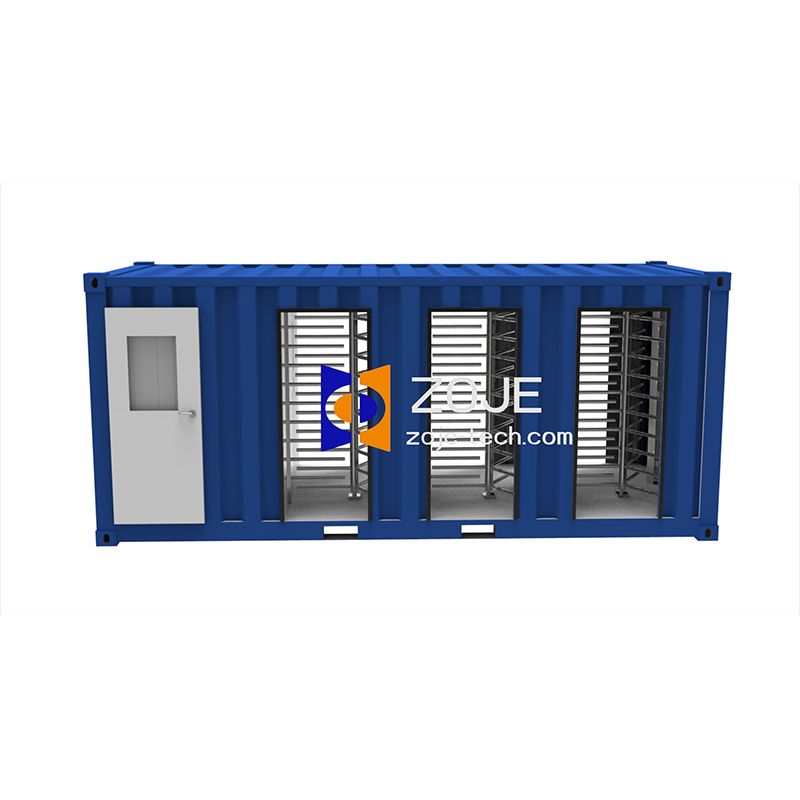
When site managers evaluate access control solutions, the Container with Full Height Turnstile often emerges as a rugged, portable, and highly secure option. However, one of the first practical questions that surfaces is whether this heavy, self-contained unit demands unusual ground work. The short answer is yes—but not in the way most people expect. Unlike a permanent concrete guardhouse, a Container with Full Height Turnstile from ZOJE is engineered for rapid deployment, yet it still requires deliberate surface assessment and minimal preparation to ensure long-term stability, safety, and warranty compliance. Ignoring this step can lead to misaligned rotating arms, premature wear on mechanical bearings, and even structural stress on the container floor over time.
Why Ground Preparation Matters for This Equipment
A standard empty shipping container weighs around 2.5 tons. Add a full-height turnstile mechanism, power distribution panels, access control servers, and anti-climb roofing, and the total operational weight of a Container with Full Height Turnstile easily exceeds 4.5 tons. When individuals pass through, dynamic loads from the rotating tripe or full-height glass barriers create lateral forces. Without a level and sufficiently load-bearing base, these forces translate into micro-movements that compromise electronic card readers and biometric scanners. ZOJE recommends that any installation site undergo a three-step ground readiness check before delivery.
The Three Critical Ground Criteria
| Criteria | Requirement | Testing Method |
|---|---|---|
| Load-Bearing Capacity | ≥ 5,000 kg/m² (for static weight) | Plate load test or soil penetration test |
| Surface Levelness | Max deviation ≤ 5 mm over 3-meter span | Laser level or digital inclinometer |
| Drainage Slope | 1–2% gradient away from unit footprint | Water flow observation or slope gauge |
If the existing ground is compacted gravel, asphalt, or reinforced concrete, the Container with Full Height Turnstile can often be placed directly with steel shims for fine-leveling. For softer surfaces like grass, loose sand, or clay, ZOJE strongly advises pouring a simple reinforced concrete pad (minimum 150 mm thickness, with rebar spacing at 200 mm) extending at least 300 mm beyond the container’s footprint on all sides. This distributes point loads and prevents frost heave in colder climates.
Installation Workflow Overview
-
Site Survey – Confirm underground utilities (power, water, fiber) to avoid excavation damage.
-
Ground Compaction – Use a vibrating plate compactor for granular soils to achieve 95% Proctor density.
-
Leveling Pad Preparation – Pour concrete or lay interlocking paving stones with a sand/cement bed.
-
Crane Positioning – Lower the Container with Full Height Turnstile onto pre-marked anchor points.
-
Final Alignment – Adjust corner twist locks and shim packs until the built-in bubble vial shows perfect level.
-
Bolt-Down Anchoring – Secure using M20 expansion bolts (if on concrete) or ground screws (if on compacted aggregate).
3 FAQ – Container with Full Height Turnstile
Q1: Can I place a Container with Full Height Turnstile directly on compacted crushed stone without a concrete slab?
A1: Yes, but only under strict conditions. ZOJE permits placement on well-compacted, graded crushed stone (20–40 mm diameter) with a minimum depth of 200 mm, compacted in 100 mm lifts, and finished with a 10 mm stone dust cap. The surface must achieve a California Bearing Ratio (CBR) of at least 8%. However, this approach requires annual re-leveling checks because stone settles unevenly over time. For permanent installations exceeding 12 months, ZOJE always recommends a concrete slab to preserve the turnstile’s optical alignment and reduce maintenance frequency by nearly 60%.
Q2: What happens if I skip bolting the Container with Full Height Turnstile to the ground?
A2: Skipping anchor bolts is a high-risk decision. Without fixed anchoring, the container can shift under wind loads (especially in open fields) or when multiple people push against the turnstile arms simultaneously. Even a 10 mm lateral shift can misalign the magnetic door sensors, triggering false intrusion alarms and emergency stops. Additionally, most insurance policies require physical anchoring for perimeter security equipment. ZOJE includes a standardized anchor kit with every unit and provides a torque specification chart—failure to use it voids the structural warranty on the floor channel and hinge assemblies.
Q3: Does frost heave affect a Container with Full Height Turnstile in freezing regions?
A3: Absolutely. Frost heave can lift one corner of the container by 20–50 mm during winter, bending the turnstile drive shaft and damaging the encoder feedback system. To prevent this, ZOJE recommends excavating 600 mm below the frost line (check local building codes) and backfilling with granular, non-frost-susceptible material, topped with a 150 mm reinforced slab that is isolated from surrounding frozen soil using 50 mm extruded polystyrene insulation beneath the slab edges. Alternatively, use helical piles (screw anchors) driven to stable soil depths, which decouple the Container with Full Height Turnstile from surface frost movement entirely.
Comparative Cost-Benefit Table
| Preparation Type | Initial Cost | Long-Term Stability | Recommended Use Case |
|---|---|---|---|
| Direct gravel placement | Low ($200–$400) | Moderate – needs quarterly checks | Temporary events (< 6 months) |
| Concrete pad (150 mm) | Medium ($800–$1,500) | High – maintenance-free for 5+ years | Construction sites, warehouses |
| Helical piles + steel subframe | High ($2,500–$4,200) | Very high – immune to soil changes | Permanent seaports, stadium entries |
Final Professional Verdict
The Container with Full Height Turnstile is not a "drop-and-go" product—it demands thoughtful ground preparation, but the effort is straightforward, well-documented, and inexpensive relative to the cost of the equipment itself. ZOJE provides every client with a detailed site-preparation checklist, including CAD drawings for anchor bolt patterns and pad reinforcement schedules. By investing just one day in proper leveling and load testing, facility managers avoid weeks of unplanned downtime and costly repair call-outs.
Contact Us
Every site is unique, and ZOJE’s engineering team is ready to review your specific ground conditions—whether you are installing on desert sand, rooftop decks, or reclaimed industrial land. Contact ZOJE today for a free site assessment, custom foundation drawings, and a no-obligation installation quote. Our experts will respond within 24 hours with solutions tailored to your soil type, climate, and security throughput requirements. Reach out now to secure your perimeter with confidence.