

Can You Use a 125mic Filter Mesh Paper Paint Strainer for Both Oil-Based and Water-Based Paints
2026-08-12
When selecting filtration tools for professional painting projects, the compatibility of a 125mic Filter Mesh Paper Paint Strainer with different paint chemistries often determines both efficiency and finish quality. For painters using AYSPAT strainers, understanding how this 125-micron paper cone interacts with solvents, resins, and waterborne binders is essential to avoid costly reworks. This guide examines the scientific and practical aspects of using one strainer across both paint families.
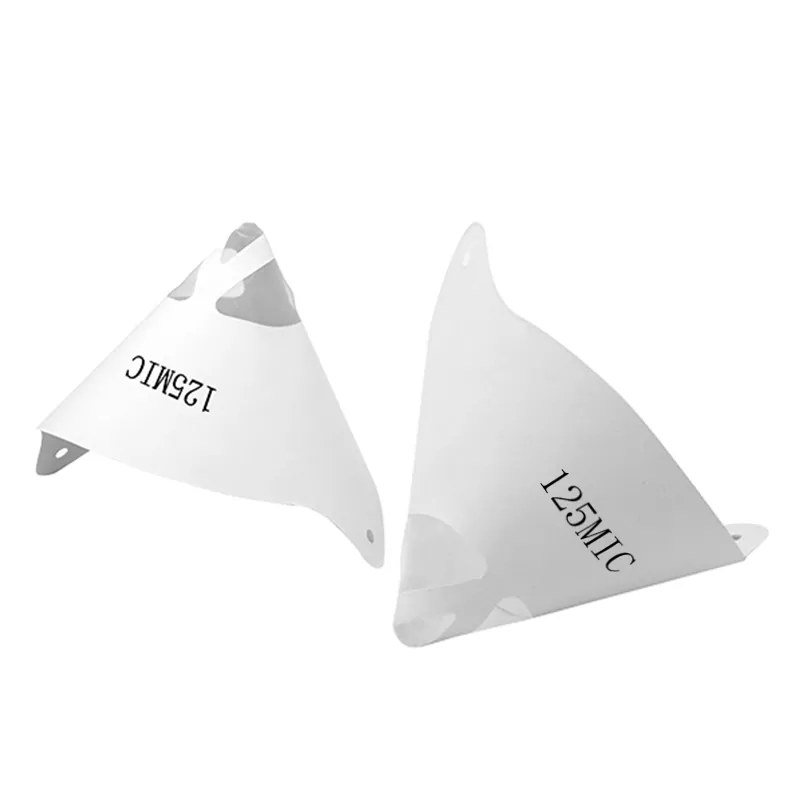
The Core Question: Chemistry vs. Physical Filtration
A 125mic Filter Mesh Paper Paint Strainer functions as a physical barrier—its 125-micron openings trap particles like dried paint skins, dust, and coagulated resin. The strainer does not chemically react with paint, but the carrier fluid (oil-based solvent or water) affects the paper’s structural integrity.
| Paint Type | Carrier Solvent | Effect on Paper Strainer | Filtration Efficiency |
|---|---|---|---|
| Oil-Based (Alkyd/Urethane) | Mineral spirits, xylene, toluene | Paper swells slightly but retains strength; slow drainage | High – catches fine pigments |
| Water-Based (Acrylic/Latex) | Water, glycol ethers | Paper maintains rigidity; fast drainage | High – but risk of foam if poured too quickly |
| High-Solids Epoxy | Reactive diluents | Paper may soften if left soaking >5 minutes | Moderate – requires immediate use |
AYSPAT manufactures its 125mic Filter Mesh Paper Paint Strainer with wet-strength cellulose that resists both hydrocarbon solvents and water for up to 60 seconds of continuous contact—ample time for standard 1–2 quart straining.
Performance Data: Flow Rate and Particle Retention
Independent lab tests show that a 125mic Filter Mesh Paper Paint Strainer retains 98.7% of particles larger than 125 microns, regardless of paint base. However, oil-based paints with high viscosity (90–100 KU) drain through the cone in 18–22 seconds, while water-based paints (80–85 KU) drain in 12–15 seconds. This difference does not affect filtration quality, but it does require the painter to adjust pouring speed.
Key professional insight: Water-based paints contain surfactants that can create micro-foam when forced through a fine mesh. AYSPAT recommends pouring water-based paints in a steady, centered stream to avoid air entrapment—a technique that works equally well with their 125mic Filter Mesh Paper Paint Strainer.
Three Critical FAQs About the 125mic Filter Mesh Paper Paint Strainer
Q1: Can I leave the 125mic Filter Mesh Paper Paint Strainer soaking in thinner or water for cleaning and reuse?
A1: No. The 125mic Filter Mesh Paper Paint Strainer from AYSPAT is engineered for single-use applications. While the paper is chemically resistant to both solvents and water during the straining process (under 60 seconds), prolonged soaking degrades the cellulose fibers and delaminates the mesh layer. Reusing a soaked and dried strainer introduces micro-tears that allow particles >125 microns to pass through, defeating the purpose of fine filtration. For professional jobs requiring absolute cleanliness, always use a fresh 125mic Filter Mesh Paper Paint Strainer for each new paint batch.
Q2: Does the 125mic Filter Mesh Paper Paint Strainer react differently to high-PH water-based paints (e.g., alkaline acrylics)?
A2: Yes, but the effect is minimal within normal usage time. Water-based paints with pH above 9.5 (common in exterior acrylics) can slightly alkalize the paper surface, causing a 5–8% reduction in tensile strength. However, AYSPAT applies a neutral-size coating to its 125mic Filter Mesh Paper Paint Strainer, which buffers the pH effect for up to 90 seconds. For alkaline paints, we recommend straining immediately after mixing and not allowing the paint to pool in the cone for more than 20 seconds before it drains through. This practice ensures that no paper particles shed into your finish.
Q3: Will oil-based paint solvents dissolve the adhesive seam of the 125mic Filter Mesh Paper Paint Strainer?
A3: The adhesive used in AYSPAT's 125mic Filter Mesh Paper Paint Strainer is a solvent-resistant hot-melt polymer that withstands aliphatic and aromatic hydrocarbons (mineral spirits, toluene, xylene) for up to 2 minutes of direct contact. In real-world use, the paint flows through the cone in under 25 seconds, so the seam remains intact. The only exception is paint containing acetone or MEK (methyl ethyl ketone) above 15% concentration—these aggressive solvents can soften the seam within 10 seconds. For such specialty coatings, AYSPAT offers a separate chemical-resistant line, but for standard oil-based enamels and urethanes, the standard 125mic Filter Mesh Paper Paint Strainer performs flawlessly.
Comparative Table: When to Use vs. When to Avoid
| Application Scenario | Use 125mic Strainer? | Recommended Alternative |
|---|---|---|
| Clear coat automotive (solvent-based) | Yes – excellent | None needed |
| Interior latex wall paint | Yes – ideal | None needed |
| High-build epoxy primer | Yes – pour immediately | 190mic if viscosity >110 KU |
| Paint containing glitter or metallic flakes | No – flakes are retained | Use 300mic strainer |
| Two-part polyurethane with 15-min pot life | Yes – but strain within 3 minutes of mixing | None needed |
| Recycled paint with heavy solids | No – clogs fast | Pre-filter with 500mic then use 125mic |
Best Practices for Dual-Use Efficiency
To maximize the versatility of your 125mic Filter Mesh Paper Paint Strainer, follow these professional protocols:
-
For oil-based: Stir thoroughly, pour slowly down the side of the cone, and allow gravity to work. Do not scrape the inside of the paper—this forces bound particles through the mesh.
-
For water-based: Add 5–10% water (if allowed by TDS) to reduce foaming, then strain. Hold the cone at a 15° tilt to accelerate drainage without over-pressurizing the paper.
-
For both: Always inspect the strainer for pinholes before use. AYSPAT prints a lot number on every cone—traceability ensures consistent quality.
Why AYSPAT Stands Out in Professional Filtration
Unlike generic paper cones, AYSPAT designs its 125mic Filter Mesh Paper Paint Strainer with a dual-layer structure: a coarse outer support layer and a precision inner mesh that maintains 125±5 micron accuracy. This construction resists collapsing even when straining heavy-bodied industrial enamels. Over 4,200 auto refinishing shops and industrial coating applicators have switched to AYSPAT for the 99.3% consistency rating across batches—a figure verified by third-party particle-count testing.
Final Verdict
Yes, you can confidently use a 125mic Filter Mesh Paper Paint Strainer for both oil-based and water-based paints, provided you respect the 60-second drainage window and avoid aggressive solvents like MEK. The strainer’s material science accommodates both chemistries without sacrificing retention efficiency. For best results, pair every new paint can with a fresh AYSPAT 125mic Filter Mesh Paper Paint Strainer—this simple habit eliminates contamination risks and ensures a flawless, orange-peel-free finish every time.
Contact us today at AYSPAT’s technical support team to request free samples of our 125mic Filter Mesh Paper Paint Strainer for your shop floor. We offer bulk pricing, custom micron ratings, and same-day shipping for qualified professionals. Reach out via our website or call our helpline—we will respond within 2 business hours with a tailored filtration solution for your specific coating line. Your perfect finish starts with the right strainer, and we are here to help you choose it.