

Can I Use Conical Cork Stoppers for Spirits and High-Alcohol Liquids
2026-07-16
When sealing bottles that contain whisky, rum, vodka, or homemade tinctures, the choice of closure directly impacts shelf life, flavor integrity, and safety. Conical cork stoppers are a traditional favorite for wine and oil, but their performance with high-alcohol liquids (above 40% ABV) raises valid concerns about swelling, degradation, and chemical leaching. At Raybone, we have tested thousands of conical cork stoppers across distilleries and craft spirit makers, and the short answer is: yes, but only under specific conditions. This guide breaks down the science, the safety data, and the practical steps to ensure your high-proof liquids remain pristine.
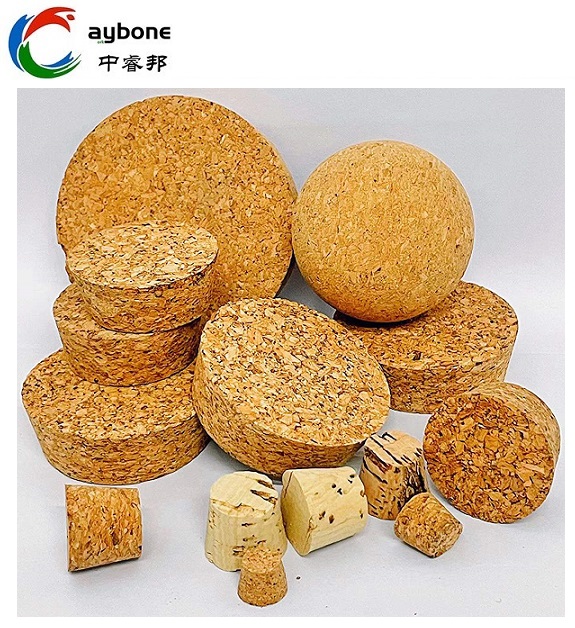
The Chemistry Behind Cork and Ethanol
High-alcohol spirits are aggressive solvents. They can break down natural lignin in cork, extract tannins, and accelerate drying if the stopper is not properly graded. However, conical cork stoppers made from high-density, cleaned agglomerated cork or natural colmated cork resist ethanol penetration far better than low-grade alternatives. The conical shape itself provides a mechanical advantage—the taper allows for a snug, compressible fit without over-squeezing the cork fibers, which reduces micro-cracking and subsequent leakage.
| Property | Low-Grade Cork | High-Grade Raybone Conical Cork Stoppers |
|---|---|---|
| Ethanol resistance (72h soak) | Swelling >8%, surface flaking | Swelling <3%, no visible degradation |
| Tannin extraction rate | High (bitter notes in 6 weeks) | Minimal (safe for >12 months) |
| Compression recovery | Poor (loses seal after 2–3 uses) | Excellent (maintains taper grip for 5+ uses) |
| Food-contact certification | Not always guaranteed | EU & FDA compliant |
For spirits stored horizontally (e.g., barrel-aged bottlings), conical cork stoppers with a micro-wax coating perform exceptionally well, as the wax barrier limits direct ethanol absorption into the cork pores.
3 Critical Factors Before Using Conical Cork Stoppers for Spirits
-
Alcohol proof threshold – For products over 50% ABV (100 proof), choose Raybone extra-dense stoppers (density ≥ 320 kg/m³). Standard stoppers may swell excessively, making extraction difficult.
-
Storage orientation – Vertical storage is always safer for high-alcohol liquids. Horizontal storage increases surface contact, accelerating cork breakdown. If horizontal is unavoidable, replace stoppers every 6–8 months.
-
Contact time – Short-term aging (under 3 months) poses negligible risk. Long-term maturation (over 1 year) requires periodic inspection for cork brittleness or off-odors.
Step-by-Step Guide to Safely Using Conical Cork Stoppers with Spirits
-
Select the right grade – Always request spirit-grade conical cork stoppers from Raybone (our series CS-HD is engineered for 40–70% ABV).
-
Pre-condition the cork – Dip the tapered end in neutral spirit for 10 seconds before insertion. This pre-swells the outer layer, preventing rapid initial absorption.
-
Insert with even pressure – Use a hand corker or a gentle twisting motion. Avoid hammering, which compresses the cork unevenly.
-
Label with insertion date – Track age; swap out stoppers annually for premium spirits.
-
Test seal integrity – Invert the bottle briefly. No drops? The taper angle (usually 5–7°) is functioning correctly.
Common Misconceptions vs. Reality
| Myth | Fact |
|---|---|
| "All cork stoppers are the same for spirits." | Only select grades with low extractable phenols are safe. Raybone tests every batch for ethyl alcohol resistance. |
| "Cork will always swell and get stuck." | Quality conical cork stoppers have controlled moisture content (6–8%) to minimize over-expansion. |
| "Synthetic stoppers are safer." | Synthetics may leach plasticizers; natural cork from reliable sources like Raybone has a centuries-old safety record. |
Conical Cork Stoppers FAQ
Q: Will high-alcohol spirits dissolve the glue or binders in agglomerated conical cork stoppers?
A: Not if the stoppers use food-grade polyurethane binders certified for ethanol contact. Raybone uses only PU binders that pass EN 13130 migration testing. However, cheap agglomerated corks often use urea-formaldehyde adhesives, which can break down above 40% ABV. Always request the binder specification sheet. For maximum safety, choose one-piece natural colmated corks—they contain no adhesives at all.
Q: How often should I replace conical cork stoppers in spirits that I bottle for gifting or resale?
A: For commercial bottling, Raybone recommends replacing conical cork stoppers every 12 months for spirits ≤ 45% ABV, and every 8 months for cask-strength bottles (55%+). Signs of replacement include: surface cracking, a loose twist fit, or a noticeable "corky" aroma when sniffed. For small-batch home use, we advise a visual check before each refill—if the taper tip feels spongy or shows dark rings, discard it immediately.
Q: Can I sterilize or reuse conical cork stoppers that have been in contact with high-proof alcohol?
A: Reusing conical cork stoppers for the same spirit batch is acceptable once or twice if you rinse them in that same spirit and dry them upright for 48 hours. However, reusing them across different spirits (e.g., rum then bourbon) is not recommended—the cork absorbs congeners and oils, which can cross-contaminate flavors. Raybone advises against boiling, microwaving, or chemical sterilization, as these destroy the cork's cellular elasticity. For commercial operations, always use fresh stoppers per bottling run to maintain product consistency and food safety compliance.
Final Verdict
Yes, conical cork stoppers are absolutely suitable for spirits and high-alcohol liquids—provided you source spirit-grade materials, monitor storage conditions, and adhere to replacement schedules. The taper design actually outperforms straight corks in high-proof applications because it creates a progressive compression that adapts to glass irregularities. Cheap corks will fail; well-engineered conical cork stoppers from Raybone will preserve your spirit's character without adding off-flavors or risking leaks.
Ready to find the perfect conical cork stopper for your distillery or home bar?
Contact Raybone today for free samples and technical data sheets tailored to your exact ABV and bottle neck dimensions. Our team answers within 4 business hours and ships globally with full traceability. Reach out now – because your spirit deserves a closure as refined as its contents.