

Customized Healthcare RFID Tag Manufacturer Streamlines Modern Hospital Workflows
2026-11-20
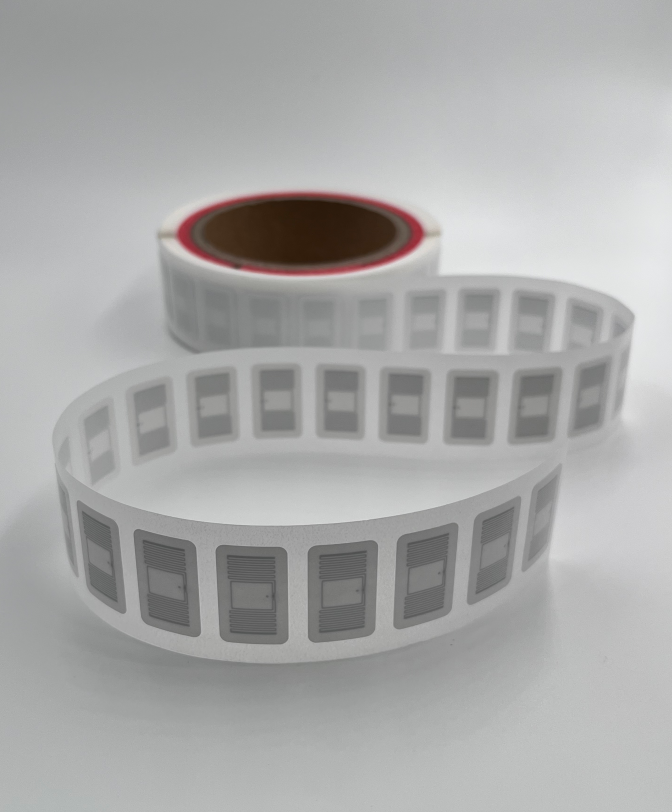
Hospitals run on split-second decisions, but behind every smooth shift is a quieter struggle: keeping track of medication carts, infusion pumps, and lab samples without piling extra steps onto clinical staff. Generic RFID tags often crack, lift, or interfere with tight hospital workflows. OSRFID builds customized healthcare RFID tags designed around real clinical routines, not the other way around. The result is fewer missing assets, cleaner data, and faster response times across modern hospital operations. Here is how the right tag design makes that possible.
A Hospital Is Not a Warehouse, and Its Tags Should Know That
Hospitals move to their own rhythm, and that rhythm is rarely linear. A crate of syringes can sit untouched for weeks; a single infusion pump might circle from the emergency department to radiology and back before noon. Warehouse logic prizes location above all else—bin, aisle, shelf—but in a clinical setting, what matters more is whether a device is clean, charged, calibrated, or safe to enter an MRI suite. A tag that simply shouts its coordinates misses the point entirely.
The physical design of the tag matters just as much as the data it carries. In a warehouse, a bulky label on a pallet is irrelevant. On a hospital bed or a ventilator, that same tag becomes a surface that must tolerate bleach, alcohol, and constant contact with skin and linen. It cannot snag gloves, confuse a nurse in low light, or emit a signal that interferes with telemetry. If the tag fights the environment instead of disappearing into it, staff will eventually peel it off, cover it, or ignore it—and at that moment the system stops being reliable.
There is also a human layer warehouses never have to consider. A patient watching a blinking tracker on their IV pole may read it as surveillance rather than safety. A clinician rushing to a code blue has no time to scan a shelf label or interpret a location code designed for inventory clerks. The best hospital tags behave less like warehouse markers and more like quiet clinical colleagues: they surface the right information at the right moment, stay out of the way, and never mistake movement for care.
Reading Through Fluid Bags, Metal Shelves, and Busy Hands
You learn to read the label in slices. A clear IV bag sways slightly on its hook, and the saline inside bends the letters behind it just enough that the expiry date becomes a soft blur. Instead of reaching for the bag, you move your head left, find the one dry line of sight between the fluid and the shelf edge, and let the numbers settle into place.
The metal shelving does not help. It throws a thin glare from the ceiling light across the tops of the boxes, wiping out the first three letters of a drug name. You read by contrast then: the dark print against amber glass, the notched corner of a carton that tells you it has been opened before, the slight difference in label wear that marks the older stock.
And then there are the hands. A nurse restocking a tray, a pharmacist passing a clipboard, a porter reaching for a box at the same moment you need to check a dose. Their fingers land across the very line you were reading. You wait, not impatiently, because the pause is part of the rhythm. When the hand moves away, the information is still there, unchanged, and you finish reading it as if no interruption ever happened.
The Customization Conversation Most Manufacturers Skip
Walk into most manufacturing plants and you'll find a gap between what customers actually need and what gets built. The spec sheet says one thing, but the day-to-day friction on the floor suggests something else. That gap rarely gets discussed because the conversation usually stops at dimensions, materials, and delivery dates. Yet the unsaid details—how a part feels during assembly, which tolerances cause recurring rework, where operators improvise to make things fit—carry the real insight. Skipping those conversations means shipping a product that works on paper but annoys in practice.
Part of the problem is that customization talk tends to be transactional. A buyer lists requirements, a sales engineer confirms them, and both sides move on. Nobody asks why certain specs were chosen years ago or whether they still reflect how the product is used today. When a manufacturer finally pauses to dig into those habits, the discoveries can be uncomfortable: a bracket dimension copied from an obsolete drawing, a surface finish specified out of tradition rather than function, a packaging assumption that no longer matches how the customer unpacks on their line. These are not dramatic flaws, but they accumulate into daily inefficiency.
The manufacturers who do ask deeper questions end up differentiating without adding cost. They might simplify a design based on how it is actually handled, adjust a tolerance to reduce inspection time, or redesign a connection point so it no longer needs a custom tool. None of that shows up in a standard quote comparison. It shows up later, as fewer line stoppages and less back-and-forth. That is the kind of customization customers remember—not because it was requested, but because someone took the time to notice what wasn't being said.
When Fewer Scans at the Bedside Become a Safety Feature
In many intensive care units, the daily chest radiograph used to be as routine as morning labs. The assumption was that more imaging meant closer monitoring. But gradually, teams noticed that a large share of these bedside films did not change management; they mostly added noise. Reducing them to clinically triggered exams did not make patients less safe. It cut radiation exposure, reduced unnecessary interruptions, and allowed nurses and physicians to focus on changes that mattered.
Part of the safety gain is subtle: every extra image creates a trail of follow-up questions. A slightly unusual but harmless finding leads to another scan, a phone call, or a procedure that carries its own risks. When bedside imaging is ordered only for a clear reason, the whole team is forced to rely more on physical examination, trends in vital signs, and the patient's trajectory. That shift can catch deterioration earlier than a routine film that nobody truly needed.
There is also a practical side. Transporting a critically ill patient to radiology or repositioning them for a portable study can dislodge lines, cause desaturation, or increase agitation. Fewer scans at the bedside mean fewer of those risks. The safety feature is not the absence of information; it is the removal of low-yield tests that generate distraction, side effects, and false reassurance.
From Patient Admission to Sterile Processing Without a Dead Zone
A patient rolls through the emergency bay doors, and somewhere behind the walls a tray of instruments waits for its next case. The distance between those two points is usually measured in hallways, elevators, and hurried phone calls. Removing the dead zone means refusing to treat that stretch as a gap where things pause and get forgotten. Instead, every handoff from the admission desk to the decontamination sink is part of a single, unbroken loop. The moment a patient is registered, the sterile processing team already knows what sets are likely to be pulled, what backup trays need to be cycled, and which autoclaves have room to breathe. No one is waiting for a phone call to tell them what they should have known twenty minutes earlier.
That continuity doesn't come from software alone or from a well-meaning manager posting a workflow chart on the wall. It comes from treating instrument turnover as a clinical vital sign rather than a back-office chore. When a scope is used in the endoscopy suite, its location and status update the same way a lab result does, visible to the circulating nurse, the charge desk, and the SPD technician in real time. The dead zone disappears because there is no step where information has to be re-entered, re-read, or re-remembered. Every movement of a tray from the OR table to the washer and back again leaves a trail that anyone can follow without walking down three floors to ask.
The payoff shows up in unglamorous ways: fewer duplicate trays opened out of uncertainty, fewer last-minute flash cycles, and a decontamination area that doesn't get slammed at two in the afternoon. But the real shift is quieter. When admission, the operating room, and sterile processing operate as one continuous surface, a patient's care doesn't stall at the edges of a department. The dead zone wasn't a lack of effort. It was a lack of a shared rhythm, and that rhythm is what keeps the whole hospital moving without a single dropped beat.
What Changes When the Tag Is Built Around the Shift, Not the Spec Sheet
When the tag stops being a summary of features and becomes the anchor of the entire build, every downstream decision changes shape. The usual path starts with a list of must-have specs, then wraps a story around them. Flipping that order means asking what the shift actually feels like: does the tag promise a lighter step, a quieter cabin, or a more connected ride? From that single promise, materials get chosen not for their data sheet numbers but for how they serve the sensation. A foam density becomes less about grams per cubic centimeter and more about how it returns energy underfoot over mile twelve. A stitch pattern earns its place because it directs flex, not because it looks technical in a close-up.
This inversion also changes the rhythm of prototyping. Instead of testing components against a tolerance sheet, teams test moments against the tagline. If the shift promise is about smooth transitions, then a lab bench loaded with torque curves matters less than a rider's perception of lag when the hammer drops. Small failures become obvious earlier because they contradict the central idea rather than just missing a number. Conversations stop circling around “is this spec competitive?” and start circling around “does this still feel like the tag?” That question cuts faster and leaves less room for feature bloat.
The result is a product that carries its story in its bones instead of wearing it as a marketing layer. Every part earns its existence through the shift, which makes the final tag sound less like an ad line and more like the only honest way to describe what was built. Riders may never know the foam density or the stitch count, but they will know within a few strides whether the promise was real. And that knowledge, not the spec sheet, is what they repeat to the next person at the trailhead.
FAQ
It has to handle exposure to hospital-grade disinfectants, attach reliably to metal carts or liquid-filled containers, and stay readable without interfering with nearby medical devices. A custom manufacturer adjusts the antenna layout, chip memory, and outer materials specifically for those clinical conditions.
The tag shape, attachment method, and printed information can be matched to existing trays, cabinets, and clipboards. That reduces awkward scanning angles and extra handling steps, so nurses and logistics staff spend less time positioning items and more time on patient care.
Many are built with chemical-resistant substrates and sealed edges that hold up to frequent wiping. The best approach is to request sample tags and test them against the exact cleaning agents used in your facility, since wipe pressure and contact time vary.
Infusion pumps, wheelchairs, surgical instrument sets, high-value implants, specimen containers, medication bins, and mobile workstations are common. The goal is usually to give each movable or reusable asset a unique digital identity that updates automatically as it passes read points.
Instead of walking room to room, staff can check a floor plan or list that shows the last recorded read location of a pump or wheelchair. Zone-level tracking gives a practical answer without requiring the precision of a real-time locating system.
Yes, tags can be pre-encoded with GS1 identifiers, asset numbers, expiration dates, or lot codes according to the hospital's data format. That removes a common source of error because receiving staff do not have to encode hundreds of blank tags by hand.
It depends on frequency and protocol compatibility, but a focused manufacturer will supply test samples and help tune read range and orientation for your current readers. UHF, HF, and NFC options can often be matched to what the hospital already uses without replacing the whole infrastructure.
They give each blood bag, medication bottle, or sample tube a machine-readable unique ID at the point of collection or dispensing. That creates an audit trail and reduces the chance of mix-ups caused by handwritten labels or look-alike packaging.
Conclusion
Most off-the-shelf RFID tags treat a hospital like a distribution center, but patient care does not move in tidy pallet patterns. A customized healthcare RFID tag manufacturer changes that starting point by designing labels around the odd realities of clinical spaces: they get read through IV fluid bags, around metal shelving, and while a nurse's hands are full, without forcing staff to stop and angle a scanner just right. Instead of racing to the lowest unit cost, the more useful conversation begins with where the tag will actually live and what interference it has to survive. That is the customization step many suppliers skip, and it is exactly what determines whether a tag works at the bedside or only looks good in a demo.
When tags are tuned for real workflows, fewer repeated scans become a safety feature rather than a minor annoyance. A nurse can confirm the right patient and the right medication in one clean pass, leaving more attention for the patient instead of the screen. That reliability also extends from admission wristbands to sterile processing trays, removing the dead zones that tend to appear in older RFID layouts near elevators, storage rooms, or steel carts. The difference shows up most clearly when the tag is built around the shift itself—night staffing, hurried handoffs, wet linens, crash carts—not around a generic spec sheet. At that point, the tag stops being an inventory label and becomes part of how the hospital actually moves.
Contact Us
Contact Person: Esme Mo
Email: [email protected]
Tel/WhatsApp: 0086 191 2931 7837
Website: https://www.osrfidglobal.com/